

Blog / Topeka Hyundai Service

Keep Your Brakes in Check: Winter Brake Safety in Topeka Starts With Stopping Power

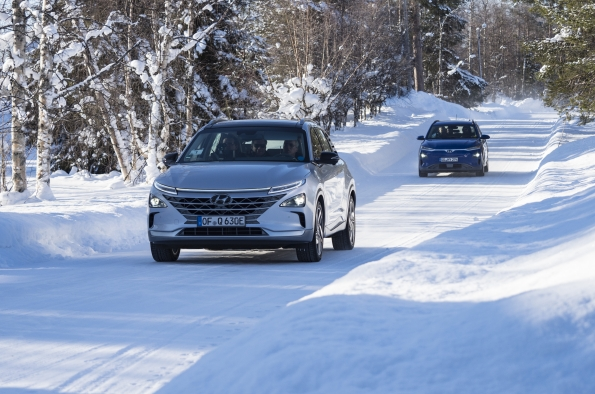
Winter brake maintenance service at McCarthy Hyundai of Topeka

Brief Summary / Excerpt: Snow, ice, slush, freezing rain, and road salt can turn routine winter driving in Topeka into a serious test of your vehicle’s braking system. Learn the signs that your brakes may need service, what a seasonal brake inspection includes, and how McCarthy Hyundai of Topeka can help you prepare for safer winter travel.

Introduction

Winter driving in Topeka and throughout northeast Kansas can be unpredictable. A clear morning commute may turn into an icy evening drive, while freezing temperatures, slush, and road treatment residue can affect traction and accelerate wear on vehicle components. In those conditions, your brakes are not simply a maintenance item; they are one of your most important safety systems.

It is important to understand that even perfectly functioning brakes cannot create traction where the road surface provides very little grip. On snow- or ice-covered roads, stopping distances can increase dramatically. However, healthy brake pads, rotors, calipers, brake fluid, tires, and electronic safety systems give your vehicle the best possible chance to respond predictably when you need to slow down or stop.

Before winter weather arrives, or anytime you notice a change in braking performance, having your braking system inspected can help protect your vehicle, your passengers, and everyone else on the road. Drivers looking for Hyundai brake service in Topeka can begin by reviewing available service and parts specials or contacting the McCarthy Hyundai of Topeka service center.

Why Winter Brake Maintenance Matters in Topeka, KS

Kansas winters do not always bring constant snowfall, but they frequently bring changing conditions: overnight freezing, slick bridges, black ice, wet slush, windblown snow, and sudden temperature swings. These conditions matter because your vehicle relies on friction between the tires and roadway to slow down safely.

According to the National Highway Traffic Safety Administration, drivers should prepare vehicles for winter conditions by inspecting critical systems, including tires, batteries, windshield wipers, coolant, and brakes. Winter vehicle preparation is especially important before longer drives or severe weather events.

Winter Road Conditions Reduce Available Traction

Your brake system may apply stopping force correctly, but your tires still need to grip the pavement. On dry pavement, braking response is usually consistent. On packed snow, freezing rain, or ice, that available grip is reduced.

This means winter drivers should expect:

  • Longer stopping distances
  • Slower acceleration from a stop
  • Reduced control during sudden braking
  • Greater risk of skidding during abrupt steering or braking
  • More difficulty stopping on hills, bridges, and untreated roads

A brake inspection cannot eliminate icy-road hazards, but it can help ensure that worn components are not adding unnecessary risk.

Slush, Salt, and Moisture Can Accelerate Wear

Winter roads expose vehicles to more than snow. Slush, moisture, salt, and road treatment residue can collect on wheel and brake components. Over time, these materials may contribute to surface corrosion and uneven wear, particularly if the vehicle is frequently parked outside or driven short distances without drying fully.

Rotors can develop temporary surface rust after wet winter weather. A small amount may clear during normal braking, but persistent grinding, vibration, or reduced braking performance should be inspected promptly.

Winter Exposes Existing Brake Problems

Cold weather does not automatically cause a healthy brake system to fail. Modern braking components and fluids are designed to work across a wide range of conditions. However, winter driving often exposes problems that were less noticeable in warmer weather, such as:

  • Brake pads already approaching replacement thickness
  • Rotors with scoring, uneven wear, or excessive rust
  • Brake fluid affected by age or moisture contamination
  • Calipers that do not move freely
  • Weak tires that limit overall stopping ability
  • Warning lights related to braking or stability-control systems

Addressing these issues before the first major winter storm is often easier, safer, and less stressful than dealing with them after a problem develops on the road.

How Your Brakes Help Protect You During Winter Driving

A vehicle’s braking system is made up of multiple components working together. When you press the brake pedal, hydraulic pressure activates the brakes at each wheel. The pads press against the rotors, generating friction that slows the vehicle.

During winter driving, several additional systems may assist you.

Brake Pads and Rotors

Brake pads provide the friction needed to slow your vehicle. Rotors give the pads a smooth, stable surface to press against. If pads are worn too thin or rotors are damaged, braking performance may become less consistent.

Common winter-related concerns include:

  • Reduced pad material before a season of challenging driving
  • Rotor corrosion caused by moisture and road residue
  • Uneven wear that creates vibration while stopping
  • Grinding caused by severely worn pads

Replacing worn brake pads early can help prevent additional rotor damage and avoid a more extensive repair.

Brake Fluid

Brake fluid transfers pressure from the brake pedal to the braking components at the wheels. Over time, brake fluid can absorb moisture, which may affect its performance and contribute to corrosion inside parts of the system.

A service technician can evaluate brake fluid condition as part of a brake inspection and advise whether replacement is appropriate based on vehicle condition, mileage, maintenance history, and manufacturer recommendations.

Anti-Lock Braking System and Stability Control

Most modern Hyundai vehicles include an anti-lock braking system, commonly known as ABS, as well as stability-related technologies designed to help during challenging conditions.

If ABS activates during braking on a slippery surface, you may feel pulsing in the brake pedal. This can be normal. Rather than repeatedly pumping the brakes, drivers should generally apply firm, steady pressure and allow the system to work, while maintaining control of the steering wheel.

Warning lights related to brakes, ABS, or stability control should not be ignored, especially before winter travel.

Common Signs Your Brakes Need Service Before Winter

Brake problems rarely improve on their own. A change in sound, pedal feel, vibration, or stopping behavior can be your vehicle’s way of telling you that an inspection is due.

Warning SignWhat You May NoticeWhy It Matters
Squeaking or squealingHigh-pitched noise while brakingBrake pad wear indicators may be contacting the rotor
Grinding or scrapingHarsh metallic noisePads may be severely worn, potentially damaging rotors
Soft or spongy pedalPedal feels less firm than normalCould indicate a hydraulic, brake fluid, or system issue
Vibration when brakingShaking in the pedal or steering wheelRotors may be uneven, worn, or damaged
Longer stopping distanceVehicle takes more distance to slow downBrake wear, tires, road conditions, or another issue may be involved
Pulling while brakingVehicle moves toward one sideMay indicate uneven braking or tire-related concerns
Burning smellSharp smell after brakingCould indicate overheating or dragging brakes
Brake or ABS warning lightDashboard indicator stays illuminatedA system diagnosis may be necessary

If you experience any of these symptoms, schedule an inspection through the Hyundai service center in Topeka as soon as practical. If braking feels severely compromised or unsafe, avoid continued driving and seek assistance.

When Should You Schedule a Winter Brake Inspection?

There is no single maintenance interval that fits every driver because brake wear depends on driving style, mileage, vehicle load, road conditions, and the components installed on the vehicle. However, there are several sensible times to request an inspection.

Schedule Brake Service Before Winter Weather If:

  • Your vehicle has not had a brake inspection recently
  • You regularly commute during early morning or evening freezing conditions
  • You plan to travel during the holiday or winter season
  • Your brakes are making noise
  • Your brake pedal feels different than usual
  • Your tires or brakes are already due for service
  • A brake, ABS, or stability warning light appears
  • You purchased a used vehicle without a complete service history

A seasonal inspection can identify concerns before snow and ice make safe stopping even more important.

Brake Inspection Versus Brake Replacement

An inspection does not automatically mean you need new brakes. During an inspection, a technician may check the condition of pads, rotors, calipers, brake lines, fluid, hardware, warning lights, and related systems.

Depending on the results, your vehicle may need:

  • No repair at the moment
  • Brake pad replacement
  • Rotor resurfacing or replacement, where appropriate
  • Brake fluid service
  • Caliper or hardware repairs
  • Additional diagnosis of warning lights or pedal concerns

Having accurate information lets you plan repairs based on actual wear rather than guesswork.

Why You Should Not Delay Brake Pad Replacement

Brake pads are designed to wear down over time. That is normal. Continuing to drive once pads are excessively worn, however, can create more serious problems.

When friction material becomes too thin, braking may become noisy or less responsive. If the pads wear through completely, metal components can contact the rotors, potentially resulting in more costly repairs.

Benefits of Timely Brake Pad Replacement

  • Maintain more dependable stopping performance
  • Reduce the risk of rotor damage
  • Minimize grinding or squealing noises
  • Support more predictable winter driving
  • Prevent a minor maintenance need from becoming a larger repair

For Topeka drivers navigating wet roads, slick parking lots, icy bridges, and winter commuting, dependable brake response is especially valuable.

Brake Care Works Best With Complete Winter Vehicle Preparation

Brakes are essential, but they are only one part of winter safety. A vehicle with fresh brakes and worn tires may still struggle to stop on slippery pavement. Preparing your Hyundai for winter should include a broader inspection of systems that affect visibility, starting reliability, traction, and comfort.

Check Tire Tread and Tire Pressure

Your tires create the connection between your vehicle and the road. Proper tread depth and correct inflation are especially important in winter conditions.

Cold temperatures can reduce tire pressure, so drivers should check inflation regularly and follow the pressure recommendation found on the vehicle label or in the owner’s manual, not the number printed as the tire’s maximum sidewall pressure.

Consider having tires checked if you notice:

  • Low tread depth
  • Uneven wear
  • Cracking or visible damage
  • Persistent low-pressure warnings
  • Reduced traction on wet or snowy roads

Test Your Battery

Cold weather can place additional demand on a weak battery. If your vehicle cranks slowly, your battery is several years old, or you have experienced intermittent starting concerns, a battery test before winter may help prevent an inconvenient no-start situation.

Inspect Wipers, Washer Fluid, and Defrosters

Winter visibility can disappear quickly when slush, road spray, or freezing precipitation hits your windshield. Make sure:

  • Wiper blades clear the windshield effectively
  • Washer fluid is appropriate for freezing temperatures
  • Front and rear defrosters work correctly
  • Exterior lights are clean and operating

Review Fluids and Heating Performance

A winter-ready vehicle should also have proper coolant protection, adequate oil condition, functional heat, and appropriate fluid levels. These systems help support reliability during cold starts and winter travel.

Drivers can ask about seasonal service options and applicable offers through McCarthy Hyundai of Topeka’s service and parts specials.

Winter Braking Tips for Safer Driving in Kansas

Vehicle maintenance matters, but driving technique is just as important when roads become slick. Kansas transportation authorities encourage drivers to slow down, increase following distance, and check conditions before traveling during winter weather. Drivers can monitor changing statewide travel conditions through KanDrive.

Leave More Space Than Usual

In snowy or icy conditions, your vehicle may require substantially more distance to stop than on dry pavement. Increase the space between your vehicle and the one ahead, even if traffic appears to be moving smoothly.

More space gives you time to:

  • Brake gradually
  • Avoid sudden steering movements
  • Respond to vehicles that skid or stop abruptly
  • Navigate untreated intersections or bridges more carefully

Brake Smoothly and Early

Sudden braking can cause traction loss on slippery roads. When possible, ease off the accelerator early and apply the brakes gradually before turns, intersections, or traffic backups.

Use Extra Caution on Bridges and Ramps

Bridges, overpasses, shaded streets, and highway ramps may freeze sooner than surrounding roadways. A road that appears wet may actually have a thin layer of ice, especially during early morning or nighttime driving.

Do Not Rely on All-Wheel Drive for Stopping

Some Hyundai vehicles offer all-wheel drive or traction-supporting technology that may help during acceleration. However, all-wheel drive does not eliminate the need for healthy brakes, appropriate tires, slower speeds, and extended stopping distance on slick roads.

Keep an Emergency Kit in Your Vehicle

For winter travel, NHTSA recommends carrying essential items that may help if you become stranded or delayed. Useful supplies may include:

  • Phone charger
  • Ice scraper and snow brush
  • Flashlight
  • Blanket or warm clothing
  • Water and nonperishable snacks
  • Jumper cables
  • First-aid kit
  • Small shovel
  • Traction material, such as sand or cat litter

Should You Service Your Brakes at a Hyundai Dealership?

Choosing where to service your vehicle is an important decision. For Hyundai owners, dealership service can provide several practical advantages, particularly when preparing for winter driving.

A Hyundai dealership service department is equipped to inspect vehicle-specific brake components and related safety systems. Technicians can review the condition of brakes alongside other seasonal needs, recommend service based on inspection findings, and help drivers understand what requires attention now versus what can be monitored.

At McCarthy Hyundai of Topeka, drivers can visit the service center for brake inspection and seasonal maintenance needs, while checking current service and parts specials for available savings opportunities.

Considering a Different Vehicle for Winter Driving?

Brake maintenance can help keep your current vehicle prepared for winter. However, some drivers may also be considering a newer vehicle with updated comfort, convenience, driver-assistance, or traction-related features.

McCarthy Hyundai of Topeka offers resources for drivers exploring their next vehicle, including:

Whether you are maintaining a dependable daily driver or searching for your next Hyundai, preparing for Kansas winter roads starts with having confidence in your vehicle.

Key Takeaways: Winter Brake Safety Benefits

  • Winter road conditions reduce traction, making healthy braking components even more important.
  • Squeaking, grinding, vibration, warning lights, pulling, or a soft pedal should be inspected promptly.
  • Timely brake pad replacement may help protect rotors and prevent more expensive repairs.
  • Brake service should be paired with tire, battery, wiper, fluid, and heating-system checks.
  • Slower speeds, increased following distance, and gradual braking remain essential on snow and ice.
  • A professional inspection can help you understand the actual condition of your vehicle before difficult winter driving begins.

Why Choose McCarthy Hyundai of Topeka for Winter Brake Service?

When winter weather arrives, you want service support from a local dealership that understands both your Hyundai and the driving conditions common throughout Topeka and northeast Kansas.

McCarthy Hyundai of Topeka provides convenient access to vehicle maintenance, brake inspections, repair support, and seasonal service resources at 2920 S Kansas Ave, Topeka, KS 66611. Drivers can turn to the dealership for help evaluating brake wear, identifying warning signs, and preparing their vehicles for colder weather.

Choosing McCarthy Hyundai of Topeka means working with a dealership focused on:

  • Service support for Hyundai vehicles
  • Brake and seasonal maintenance assistance in one convenient location
  • Access to applicable service and parts offers
  • A local team serving drivers throughout the Topeka area
  • Sales, finance, and service resources available under one dealership relationship

Learn more about McCarthy Hyundai of Topeka, review available service and parts specials, or visit the service center to prepare your vehicle for winter travel.

Conclusion: Start Winter With Confidence in Your Brakes

Winter driving can challenge even experienced Kansas drivers. Snow, ice, freezing rain, moisture, and rapidly changing road conditions all make it more important to know that your vehicle is prepared to respond when you press the brake pedal.

A proactive brake inspection can help identify worn pads, rotor concerns, unusual brake behavior, warning-light issues, or other maintenance needs before they become more stressful during hazardous weather. Pairing brake service with tire checks, battery testing, visibility maintenance, and smart winter driving habits gives you a stronger foundation for safer seasonal travel.

For winter brake service in Topeka, contact McCarthy Hyundai of Topeka at (785) 267-2800 or visit the McCarthy Hyundai of Topeka service center to get started.

Frequently Asked Questions

How do I know if my brakes need service before winter?

Common signs include squeaking, grinding, pedal vibration, a soft brake pedal, increased stopping distance, pulling to one side, or a brake warning light. If you notice any of these symptoms, arrange a professional brake inspection.

Does cold weather damage brakes?

Cold weather alone does not normally damage a properly maintained brake system. However, winter moisture, road salt, slush, corrosion, reduced traction, and existing brake wear can make braking concerns more noticeable or more urgent.

Do brakes take longer to stop on ice even if they are in good condition?

Yes. Your brakes rely on tire traction, and icy or snowy pavement offers less grip than dry pavement. Healthy brakes help your vehicle function as intended, but drivers should still slow down and leave considerably more stopping distance in winter conditions.

How often should I have my brake pads checked?

Brake-pad inspection frequency depends on mileage, driving habits, road conditions, and vehicle use. A seasonal inspection before winter is a smart choice, particularly if you commute regularly, travel frequently, or notice braking changes.

Should I replace brake pads before winter?

If your brake pads are worn or approaching replacement, completing the service before severe winter weather can help provide more reliable braking performance and may reduce the risk of rotor damage.

What should be included in a winter vehicle inspection?

A winter readiness inspection may include brakes, tires, battery, wipers, washer fluid, coolant, lights, heating and defrost systems, and other maintenance items based on your vehicle’s condition and service history.

Where can I schedule Hyundai brake service in Topeka?

Drivers can visit the McCarthy Hyundai of Topeka service center for brake inspections, maintenance, and winter vehicle service needs.
Posted in:

Related Posts

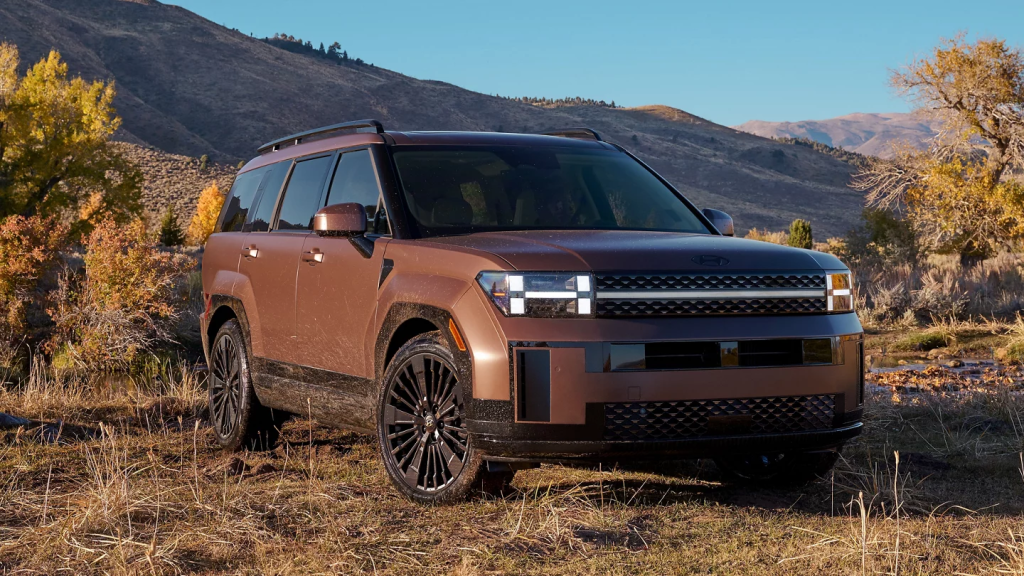
2026 Hyundai Santa Fe interior with curved display and three-row family seating

More Than a Face-Lift: Exploring the Redesigned Interior of the 2026 Hyundai Santa Fe

Brief Summary / Excerpt: The 2026 Hyundai Santa Fe interior is more than a simple update. With three-row flexibility, a bold open cabin, available dual 12.3-inch displays, smart storage, modern connectivity, and family-focused comfort, the Santa Fe brings a fresh approach to midsize SUV design for Topeka drivers. Introduction Some vehicle redesigns are subtle. A new grille, updated lights, a refreshed wheel design, and a few new trim details may be enough to call a model “new.” The 2026 Hyundai Santa Fe is different. Its design shift is bold on the outside, but the real transformation becomes clear when you step inside. The Santa Fe interior feels more open, more useful, and more modern than many shoppers may expect from a family SUV. Hyundai has leaned into a boxier, adventure-ready shape that helps support practical interior packaging, including three-row seating, flexible cargo space, and a cockpit filled with advanced technology. For Topeka families, commuters, and weekend travelers, that matters. A great SUV interior should make everyday life easier, whether you are driving to work, picking up kids from school, loading sports gear, heading toward Kansas City, or planning a weekend at the lake. The 2026 Hyundai Santa Fe is designed to feel ready for all of it. If you are shopping for a Hyundai Santa Fe for sale in Topeka, KS, you can browse current new Hyundai vehicles in Topeka or schedule a Hyundai test drive at McCarthy Hyundai of Topeka. A Cabin Designed Around Space and Practicality The redesigned Santa Fe stands out because its exterior shape supports its interior usefulness. The upright profile, broad rear opening, and squared-off design all contribute to an SUV that feels built around real family needs. According to the official Hyundai Santa Fe model page, the 2026 Santa Fe offers three-row seating and up to 79.6 cubic feet of cargo capacity behind the first row. That makes it a strong option for drivers who want flexible room for passengers, luggage, groceries, sports equipment, pets, and weekend gear. Interior practicality is about more than a single cargo number. The Santa Fe gives families the ability to adjust the cabin based on the day. Need room for passengers? Use all three rows. Need space for luggage? Fold the rear seats. Need a mix of both? Adjust the seating to match the trip. Why Three-Row Flexibility Matters Not every family needs a large SUV every day, but occasional third-row seating can be incredibly useful. The Santa Fe gives households more flexibility without forcing every shopper into a larger vehicle. Three-row flexibility can help with: Carpooling School drop-offs and pickups Weekend family outings Traveling with grandparents or friends Sports practices and tournaments Extra passenger space during road trips For families that need maximum space every day, the Hyundai Palisade may still be worth comparing. But for many drivers, the Santa Fe offers a smart middle ground between compact SUV convenience and full-size family-hauling needs. Modern Interior Design With a Wide, Open Feel The 2026 Santa Fe cabin uses a clean, horizontal design that helps make the interior feel wider and more refined. Instead of crowding the dashboard with visual clutter, Hyundai gives the cabin a modern layout with strong lines, intuitive controls, and available digital displays that sit neatly in front of the driver and center stack. The result is an interior that feels more premium than traditional family SUVs. It is practical, but it does not feel plain. It is modern, but not overly complicated. That balance is one of the biggest reasons the Santa Fe interior stands out. Interior Design Highlights Wide dashboard layout Open cabin feel Three-row seating design Available premium seating materials Flexible cargo area Useful storage spaces throughout the cabin Available ambient-style premium touches depending on trim Feature availability varies by trim, so shoppers should compare the exact Santa Fe configuration they are considering. Available Dual 12.3-Inch Displays One of the most eye-catching parts of the Santa Fe interior is its available panoramic curved display. Hyundai offers an available setup that combines a 12.3-inch digital instrument cluster with a 12.3-inch touchscreen navigation display. Together, these displays help create a clean and tech-forward cabin experience. The driver information display can show important driving details, while the center touchscreen supports navigation, media, connectivity, and vehicle settings. This layout gives the Santa Fe a more modern feel and helps keep key information easier to access. Why the Display Layout Works Well Important driving information is easy to see The cabin feels more modern and premium Navigation and media controls are more accessible The wide screen design supports the open dashboard layout It helps the Santa Fe feel current for tech-focused families For shoppers comparing SUVs, this type of digital cabin can make a big difference during a test drive. It is one thing to read about screen size; it is another to see how the displays feel from the driver’s seat. Wireless Connectivity for Daily Convenience Families use their vehicles as mobile command centers. Phones, playlists, maps, calls, messages, charging cables, school schedules, and travel plans all move through the cabin every day. The 2026 Santa Fe supports modern connectivity with available and standard features that help reduce friction. According to Hyundai, the 2026 Santa Fe includes wireless Apple CarPlay and Android Auto compatibility. This allows drivers to access compatible smartphone apps, music, maps, and communication features without plugging in a cable. Depending on trim, available technology may include: Wireless Apple CarPlay compatibility Wireless Android Auto compatibility Available wireless device charging Multiple USB ports Available navigation Available Hyundai Digital Key Available premium audio Available Bluelink connected services For busy households, fewer cables and easier phone integration can make every drive feel smoother. Comfort Features for Everyday Driving and Road Trips The Santa Fe interior is designed for more than short errands. It is also built for longer drives, family trips, and days when you spend more time in the vehicle than expected. Depending on trim, Santa Fe comfort features may include: Available heated and ventilated front seats Available heated rear seats Available leather-trimmed seating Available Nappa leather seating surfaces on select trims Available dual-zone automatic climate control Available driver seat memory system Available power front seats Available panoramic sunroof Some sources mention relaxation-style front seats with leg rests in connection with the Santa Fe, but availability can vary by market and trim. For shoppers in the United States, it is best to confirm the exact comfort features available on the specific 2026 Santa Fe trim at McCarthy Hyundai of Topeka. Smart Storage Throughout the Cabin Family SUVs need storage that works in real life. The Santa Fe interior includes thoughtful storage solutions that help reduce clutter and keep commonly used items within reach. Storage needs vary from family to family, but most drivers need places for: Phones Water bottles Sunglasses Charging cables Snacks Kids’ items Travel documents Small bags Emergency supplies The Santa Fe’s open interior layout helps make these everyday items easier to manage. For longer drives, the ability to keep the cabin organized can make a major difference in comfort. Available UV-C Sterilization Compartment One of the Santa Fe’s more unique available features is a UV-C sterilization compartment on select trims. This feature is designed to help sanitize small compatible items such as phones, wallets, or other personal objects while parked. It is a small detail, but it shows Hyundai’s interest in adding thoughtful technology that fits modern lifestyles. Families, commuters, and frequent travelers may appreciate having an extra way to manage everyday items inside the cabin. Cargo Space Built for Busy Families A stylish interior is nice, but an SUV still needs to carry your life. The Santa Fe backs up its design with useful cargo space. Hyundai lists up to 79.6 cubic feet of cargo capacity behind the first row, giving drivers room for luggage, sports gear, strollers, camping equipment, groceries, and home improvement supplies. Common Cargo Uses Family road-trip luggage Sports bags and equipment Groceries and bulk shopping items Strollers and child gear Pet supplies Camping or lake-trip gear School projects and backpacks Small furniture or storage bins If cargo space is one of your top priorities, bring measurements or key items during your test drive. Real-world cargo fit depends on shape, not just cubic feet. Hyundai SmartSense Inside the Santa Fe The Santa Fe interior experience also includes driver-assistance technology designed to support confidence. Hyundai SmartSense features can help monitor certain driving conditions and provide alerts or assistance when needed. Hyundai explains its driver-assistance technologies on the official Hyundai SmartSense safety page. Depending on trim and equipment, Santa Fe safety features may include: Forward Collision-Avoidance Assist Lane Keeping Assist Lane Following Assist Blind-Spot Collision Warning or related blind-spot assistance features Rear Cross-Traffic Collision-Avoidance Assist Driver Attention Warning Smart Cruise Control with Stop & Go Highway Driving Assist availability These features are designed to assist the driver, not replace attentive driving. Weather, road conditions, lane markings, sensor visibility, and traffic situations can all affect system performance. Why the 2026 Santa Fe Interior Works for Topeka Drivers Topeka drivers need vehicles that can handle routine life and weekend plans. The Santa Fe interior is well-suited to that mix. It offers the flexibility to carry family and cargo, the technology to stay connected, and the comfort to make longer drives easier. The Santa Fe interior is especially useful for: Families needing occasional third-row seating Drivers who want modern technology without moving into a luxury SUV Weekend travelers who carry cargo and passengers Commuters who want comfort and smart safety features Shoppers who want an SUV that feels fresh and distinctive Whether you are headed to a game, loading gear for a weekend trip, commuting around Topeka, or driving across Kansas, the Santa Fe cabin is designed to make the trip easier. Shopping for a Hyundai Santa Fe in Topeka If you are ready to compare Santa Fe trims, McCarthy Hyundai of Topeka offers convenient shopping tools and local support. Browse new Hyundai vehicles in Topeka Explore used cars for sale in Topeka Shop certified pre-owned Hyundai vehicles Review new Hyundai vehicle specials Learn about Hyundai financing options Schedule a Hyundai test drive in Topeka A test drive is especially important with the Santa Fe because the interior is one of its biggest strengths. Sit in each row, test the cargo area, try the touchscreen, connect your phone, and compare trims before deciding. Key Takeaways The 2026 Hyundai Santa Fe interior is a major part of the SUV’s redesign. Three-row seating gives families useful passenger flexibility. Hyundai lists up to 79.6 cubic feet of cargo capacity behind the first row. The available panoramic curved display includes dual 12.3-inch screens. Wireless Apple CarPlay and Android Auto compatibility support easier connectivity. Available comfort features may include heated and ventilated seats, premium seating materials, and a panoramic sunroof. The Santa Fe interior works well for families, commuters, road trips, and everyday Topeka driving. Why Choose McCarthy Hyundai of Topeka? When you are exploring a redesigned SUV like the Hyundai Santa Fe, it helps to work with a dealership team that can walk you through trims, features, technology, seating, cargo space, and financing options. McCarthy Hyundai of Topeka helps local shoppers compare Hyundai vehicles with confidence. Located at 2920 S Kansas Ave, Topeka, KS 66611, McCarthy Hyundai of Topeka serves drivers throughout Topeka and northeast Kansas with new Hyundai vehicles, used vehicles, certified pre-owned options, financing resources, and service after the sale. Drivers choose McCarthy Hyundai of Topeka for: Helpful Hyundai product knowledge New, used, and certified pre-owned Hyundai options Convenient test-drive scheduling Financing resources for different budgets Service support after the sale A local team focused on customer care Learn more about McCarthy Hyundai of Topeka, browse new Hyundai inventory, or schedule a Hyundai test drive. Conclusion The 2026 Hyundai Santa Fe interior is far more than a light refresh. It is a full rethink of what a practical family SUV cabin can feel like. With three-row flexibility, a wide modern dashboard, available dual 12.3-inch displays, wireless smartphone connectivity, thoughtful storage, useful cargo room, and available comfort features, the Santa Fe makes a strong case for families who want both function and style. For Topeka drivers looking for a midsize SUV that feels modern, spacious, and ready for real life, the Santa Fe deserves a close look. To explore the 2026 Hyundai Santa Fe interior in person, contact McCarthy Hyundai of Topeka at (785) 267-2800, browse current new Hyundai vehicles in Topeka, or schedule a test drive. Frequently Asked Questions Does the 2026 Hyundai Santa Fe have three rows? Yes. The 2026 Hyundai Santa Fe offers three-row seating, making it a flexible option for families and drivers who occasionally need extra passenger space. How much cargo space does the 2026 Hyundai Santa Fe have? Hyundai lists the 2026 Santa Fe with up to 79.6 cubic feet of cargo capacity behind the first row. Does the 2026 Santa Fe have a curved display? The 2026 Hyundai Santa Fe offers an available panoramic curved display that combines a 12.3-inch digital instrument cluster with a 12.3-inch touchscreen navigation display. Does the Hyundai Santa Fe have wireless Apple CarPlay and Android Auto? Yes. Hyundai lists wireless Apple CarPlay and Android Auto compatibility for the 2026 Santa Fe. Is the Hyundai Santa Fe interior good for families? Yes. The Santa Fe interior is family-friendly thanks to three-row seating, flexible cargo space, useful storage, available comfort features, and modern safety technology. Where can I test drive a Hyundai Santa Fe in Topeka? You can schedule a Hyundai Santa Fe test drive through McCarthy Hyundai of Topeka.


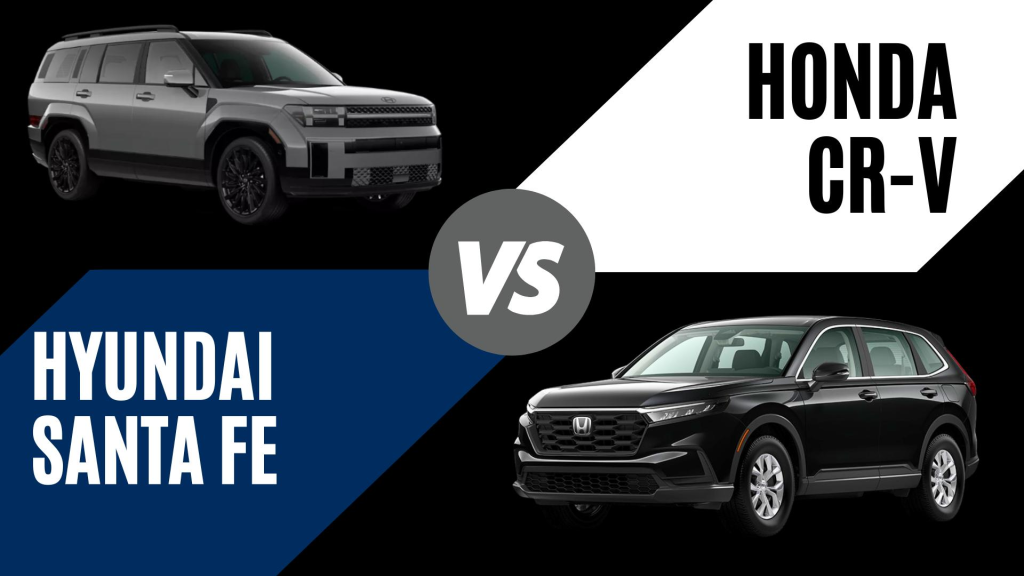
2026 Hyundai Santa Fe compared to 2026 Honda CR-V at McCarthy Hyundai of Topeka dealership in Topeka Kansas

2026 Hyundai Santa Fe vs 2026 Honda CR-V: The Comparison Topeka Drivers Need to See

Summary: The 2026 Hyundai Santa Fe and the 2026 Honda CR-V are both respected midsize SUVs with strong reputations, but they serve meaningfully different priorities. The Santa Fe delivers substantially more horsepower, available three-row seating for up to seven passengers, a more powerful standard engine, America's best warranty, and a richer standard technology package. The CR-V counters with better fuel economy on gas-only models and a lower starting price. This detailed comparison breaks down every key category so Topeka drivers can make the best decision for their needs. Both vehicles are available at McCarthy Hyundai of Topeka. Introduction: Two Strong Contenders, One Clear Right Choice for Most Buyers Walk into any conversation about midsize SUVs and two names come up consistently: the Hyundai Santa Fe and the Honda CR-V. Both have earned their reputations through years of refinement, strong reliability records, and broad appeal to families and commuters alike. But choosing between them is not simply a matter of brand preference. These two vehicles make meaningfully different decisions about what a midsize SUV should prioritize, and understanding those differences will help you determine which one truly fits your life. For 2026, both vehicles have received meaningful updates. The Santa Fe moves to a new conventional 8-speed automatic transmission on gas models, resolving a previous complaint about the older dual-clutch setup, and adds new standard safety equipment across all trims. The CR-V continues as a well-rounded, efficient compact-leaning SUV that prioritizes fuel economy and everyday practicality in a two-row package. Let's break down exactly how these two vehicles stack up across every category that matters. Performance and Engine Options: Power Meets Efficiency For drivers who care about what happens when they press the accelerator, the 2026 Hyundai Santa Fe has a clear and significant advantage over the 2026 Honda CR-V. 2026 Hyundai Santa Fe Performance The standard 2026 Santa Fe is powered by a turbocharged 2.5-liter inline-4 engine producing 277 horsepower and 311 lb-ft of torque, paired with a new conventional 8-speed automatic transmission. This powertrain pushes the Santa Fe from 0 to 60 mph in just over six seconds, delivering confident and responsive acceleration whether you're merging onto I-70 or passing on a two-lane Kansas highway. Front-wheel drive is standard, with Hyundai's HTRAC AWD available as an option across most trims and standard on the XRT. The Santa Fe is also available as a hybrid, using a turbocharged 1.6-liter four-cylinder paired with an electric motor for a combined output of 231 horsepower. The hybrid also transitions to a new 8-speed torque-converter automatic for 2026, significantly improving smoothness over the previous dual-clutch unit. EPA-estimated fuel economy for the gas Santa Fe comes in at 20 MPG city and 29 MPG highway, while the hybrid variant achieves real-world efficiency in the low-to-mid 30s MPG depending on configuration. For maximum flexibility, the Santa Fe is also available as a plug-in hybrid (PHEV), allowing short-distance electric-only commuting alongside hybrid efficiency on longer drives. The Santa Fe's towing capacity reaches up to 3,500 pounds when properly equipped, suitable for small boats, utility trailers, and camping gear, which is meaningful for Kansas drivers who take weekend trips to Milford Lake or Pomona Reservoir. 2026 Honda CR-V Performance The 2026 Honda CR-V uses a 1.5-liter turbocharged inline-4 producing 190 horsepower, paired with a continuously variable transmission (CVT). The CR-V is noticeably less powerful than the Santa Fe, a gap that becomes apparent during highway merges and in situations requiring more urgent acceleration. It is, however, more fuel-efficient on the gas-only model, achieving an EPA-estimated 28 MPG city and 33 MPG highway, a meaningful difference for drivers who log high annual mileage and prioritize fuel savings. A Honda CR-V Hybrid is available and produces 204 horsepower from its hybrid system, bridging some of the power gap. Towing capacity for the CR-V is limited to 1,500 pounds, which is significantly lower than the Santa Fe's 3,500-pound rating and rules the CR-V out for buyers who need to tow even modestly loaded trailers. Performance Verdict If power, towing capability, and more flexible powertrain choices matter to you, the 2026 Santa Fe wins this category clearly. The CR-V holds the fuel economy advantage on gas-only models, which is the right choice for buyers who do not need extra power or towing and want to minimize fuel costs. Interior Comfort and Technology: Premium Space vs Practical Efficiency Step inside both vehicles and you'll notice two distinct design philosophies at work. The 2026 Santa Fe prioritizes a more upscale, spacious feel with premium touches throughout, while the CR-V maintains Honda's signature clean and functional layout. 2026 Hyundai Santa Fe Interior The 2026 Santa Fe is available with seating for six or seven passengers across three rows, making it a genuinely versatile family hauler that the CR-V simply cannot match. Cargo space measures 14.6 cubic feet behind the third row, expanding to 40.5 cubic feet with the third row folded and a generous 79.6 cubic feet with all rear seats down. The technology package in the Santa Fe is standard across all trims, featuring: Dual 12.3-inch curved panoramic displays combining the digital instrument cluster and infotainment screen into one seamless widescreen panel Wireless Apple CarPlay and Android Auto standard on all trims Dual wireless device charging pads on XRT and higher trims Available panoramic dual-pane sunroof on upper trims Available Bose Premium Audio System with 12 speakers on Limited and Calligraphy trims Available heated and ventilated front seats, heated rear seats, and ambient interior lighting Standard hands-free power liftgate across all trims The 2026 Santa Fe also introduces new Terrain Mode (Mud, Snow, Sand) settings on the XRT trim, third-row USB ports on SEL and XRT trims, and standard second-row captain's chairs on the Limited trim for a more premium experience. 2026 Honda CR-V Interior The CR-V's interior is clean, thoughtfully organized, and practical. Its layout is easy to learn and the cabin materials are good for its price point. However, the CR-V is a strictly two-row, five-passenger vehicle, which is a fundamental limitation compared to the Santa Fe for families who need more seating flexibility. The base CR-V comes with a 7-inch touchscreen, while higher trims upgrade to a 9-inch screen. Wired Apple CarPlay and Android Auto are standard, but wireless connectivity requires higher trim levels. Cargo space behind the rear seats is more generous than the Santa Fe on a two-row basis, but the Santa Fe's third-row folding flexibility gives it the advantage for buyers who need maximum versatility. Interior and Technology Verdict The Santa Fe's dual 12.3-inch curved displays, three-row seating, and broader standard technology package give it a clear advantage in this category. The CR-V's interior is functional and well-made, but it cannot match the Santa Fe's space, seating flexibility, or technology depth. Safety Features: Both Strong, Santa Fe Has the Edge Both the 2026 Hyundai Santa Fe and the 2026 Honda CR-V come well-equipped with modern safety technology, and buyers of either vehicle will be protected by a robust suite of driver-assist systems. The distinction here is in the depth and standard availability of those features. 2026 Hyundai Santa Fe Safety The 2026 Santa Fe received a meaningful safety upgrade with automatic emergency braking with junction turning and driver oncoming monitoring now standard across all trims, an addition that was previously reserved for higher trim levels. The full Hyundai SmartSense suite on every Santa Fe includes: Forward Collision-Avoidance Assist with Pedestrian and Cyclist Detection Blind-Spot Collision Warning and Rear Cross-Traffic Collision-Avoidance Assist Lane Keeping Assist and Lane Following Assist Driver Attention Warning Safe Exit Assist that warns rear passengers before they open a door into approaching traffic Surround-View Monitor available on upper trims for a 360-degree bird's-eye view of the vehicle's surroundings The 2026 Santa Fe earned a Top Safety Pick+ designation from the IIHS under the more demanding 2026 evaluation criteria that require stricter performance in back-seat passenger protection and pedestrian crash avoidance. The Santa Fe also earned a 5-star overall safety rating from NHTSA. 2026 Honda CR-V Safety The CR-V comes equipped with Honda Sensing, Honda's comprehensive standard safety suite that includes forward collision warning, automatic emergency braking, lane keeping assist, adaptive cruise control, and a driver attention monitoring system. The CR-V has also consistently earned strong safety ratings from both NHTSA and IIHS. Safety Verdict Both vehicles offer genuinely excellent standard safety technology. The Santa Fe's 2026 updates bring its full safety suite to every trim, and its IIHS Top Safety Pick+ recognition under stricter 2026 criteria gives it a slight but notable advantage in this comparison. Browse our safety-equipped 2026 Santa Fe inventory at McCarthy Hyundai of Topeka. Pricing and Value: More Features, Longer Coverage Price is always part of the conversation, and both vehicles occupy slightly different positions in the market. Understanding what you get for your money at each price point is key to making the right decision. 2026 Hyundai Santa Fe Pricing The 2026 Santa Fe starts at $36,400 to $36,650 MSRP depending on configuration, with the lineup spanning up to $49,200 for the top-of-the-line Calligraphy trim. The Santa Fe Hybrid carries only about a $1,000 premium over the equivalent gas trim, making the efficiency upgrade an extremely accessible choice. Trim levels include SE, SEL, XRT, Limited, and Calligraphy, with the SEL representing the strongest everyday value according to multiple independent automotive reviewers. Hyundai's industry-leading warranty adds significant long-term value to the Santa Fe's price proposition: 10-year / 100,000-mile Powertrain Warranty 5-year / 60,000-mile Bumper-to-Bumper Warranty 5-year / Unlimited-Mile 24-Hour Roadside Assistance Bluelink+ connected services complimentary for life for original owners of 2024 and newer models U.S. News and World Report describes the Santa Fe as "a standout value" that "costs thousands of dollars less than its midsize SUV competitors while generally offering just as much performance and cargo space and a whole lot more standard tech and safety features." 2026 Honda CR-V Pricing The 2026 Honda CR-V starts at approximately $32,370 MSRP for the base LX trim, making it noticeably less expensive at entry level than the Santa Fe. However, the CR-V's lower starting price reflects its two-row seating, less powerful engine, and a smaller standard technology package on base trims. As you climb the CR-V's trim ladder toward comparable feature content, the price gap narrows considerably. Honda's warranty offers a 5-year / 60,000-mile powertrain warranty, half the coverage Hyundai provides, and does not include the same level of complimentary connected services. Pricing and Value Verdict The CR-V has a lower entry price, but the Santa Fe delivers substantially more for the money once you account for three-row seating, more standard technology, greater engine power, superior towing, and Hyundai's 10-year powertrain warranty. For buyers who want the most value per dollar over the full life of their ownership, the Santa Fe makes a compelling case. Check out our new vehicle specials at McCarthy Hyundai of Topeka for current offers on the 2026 Santa Fe, and visit our financing center to apply online before your visit. 2026 Hyundai Santa Fe vs 2026 Honda CR-V: Side-by-Side Comparison Category 2026 Hyundai Santa Fe 2026 Honda CR-V Starting MSRP $36,400 ~$32,370 Standard Engine 2.5L Turbo, 277 hp / 311 lb-ft 1.5L Turbo, 190 hp / 179 lb-ft Transmission 8-Speed Automatic (new for 2026) CVT Gas MPG (FWD) 20 city / 29 hwy 28 city / 33 hwy Hybrid Available Yes (231 hp) + PHEV option Yes (204 hp) Seating 6 or 7 passengers (3 rows) 5 passengers (2 rows) Towing Capacity Up to 3,500 lbs Up to 1,500 lbs Max Cargo Space 79.6 cu ft ~76.5 cu ft Infotainment Dual 12.3" curved displays (standard) 7" or 9" touchscreen (trim dependent) Wireless CarPlay Standard all trims Higher trims only Powertrain Warranty 10 years / 100,000 miles 5 years / 60,000 miles Connected Services Bluelink+ free for life (original owner) Honda Connect (subscription after trial) IIHS Safety Award Top Safety Pick+ (2026) Top Safety Pick (2025/2026) Which One Is Right for You? The 2026 Honda CR-V is an excellent choice for drivers who prioritize fuel efficiency on the gas-only model, prefer a more compact footprint, and don't need more than five seats or significant towing capability. If your driving primarily involves city commuting and you want to minimize fuel costs, the CR-V's 28/33 MPG rating is a genuine advantage. However, if you're like most Topeka-area drivers who need a vehicle that can handle real family life including three-row seating for kids and grandparents, confident power for Kansas highway driving, enough towing for a weekend on the water, a longer warranty that protects your investment for a full decade, and a standard technology package that doesn't require stepping up to premium trims, the 2026 Hyundai Santa Fe is the clearly stronger overall package. The Santa Fe is particularly well-suited to drivers who: Need occasional three-row seating without committing to a full-size SUV Want substantially more horsepower and better towing capability than the CR-V provides Value a longer powertrain warranty for long-term peace of mind Want advanced standard technology on every trim without paying for higher-level packages Are considering a hybrid but want a more powerful option than the CR-V Hybrid offers Why Choose McCarthy Hyundai of Topeka? Once you've made the decision to go with the 2026 Hyundai Santa Fe, the next step is finding a dealership that makes the buying experience as smooth and rewarding as the vehicle itself. McCarthy Hyundai of Topeka has earned a 4.6-star rating from over 1,700 Google reviews from real Topeka-area customers, and that reputation is built on a simple commitment: putting people first at every stage of the process. No-pressure, customer-first approach: Our team helps you find the right trim and configuration for your needs and budget without guesswork or pressure. Extensive Santa Fe inventory: Browse gas, hybrid, and plug-in hybrid Santa Fe trims across our full new Hyundai inventory. We also carry used vehicles and Certified Pre-Owned options at every budget level. Flexible financing: Our finance team works with a broad lender network to secure the best available rates for your situation. Apply online in minutes before your visit. Factory-trained service department: We keep your Santa Fe performing at its best long after the sale. Check our service and parts specials for ongoing maintenance savings. Conveniently located: Find us at 2920 S Kansas Ave, Topeka, KS 66611, easy to reach from anywhere in the greater Topeka area. Conclusion: The 2026 Hyundai Santa Fe Is the Stronger All-Around Choice The 2026 Honda CR-V is a good vehicle. But when you measure the 2026 Hyundai Santa Fe against it across every meaningful category, the Santa Fe wins the comparison for the majority of buyers. More horsepower, more seating, more standard technology, a longer warranty, superior towing, and the flexibility of hybrid and plug-in hybrid options give the Santa Fe a well-rounded capability the CR-V cannot match. For Topeka families and drivers who want a midsize SUV that's ready for everything Kansas life demands, from school runs to highway cruising to weekend lake trips, the 2026 Santa Fe belongs at the top of your list. Come see it in person at McCarthy Hyundai of Topeka. Browse our 2026 Hyundai Santa Fe inventory, check our new vehicle specials, or schedule your test drive at McCarthy Hyundai of Topeka today. Frequently Asked Questions: 2026 Hyundai Santa Fe vs 2026 Honda CR-V Is the 2026 Hyundai Santa Fe bigger than the 2026 Honda CR-V? Yes. The 2026 Santa Fe is a midsize SUV with available three-row seating for six or seven passengers and up to 79.6 cubic feet of maximum cargo space. The CR-V is a compact SUV with five-seat, two-row seating only. The Santa Fe is the larger and more spacious vehicle in virtually every dimension that matters for families. Which has better fuel economy, the Santa Fe or the CR-V? The 2026 CR-V has better fuel economy on the gas-only model, with an EPA-estimated 28 MPG city and 33 MPG highway versus the Santa Fe's 20 MPG city and 29 MPG highway. However, the Santa Fe Hybrid significantly closes this gap with real-world efficiency in the low-to-mid 30s MPG, while also offering more horsepower than the CR-V Hybrid. Which has a better warranty, the Santa Fe or the CR-V? The 2026 Santa Fe has a significantly stronger warranty. Hyundai covers the Santa Fe with a 10-year/100,000-mile powertrain warranty and 5-year/60,000-mile bumper-to-bumper coverage. Honda's CR-V comes with a 5-year/60,000-mile powertrain warranty. The Santa Fe also includes Bluelink+ connected services free for life for original owners, while Honda's connected services require a subscription after the trial period. Does the 2026 Hyundai Santa Fe have three rows of seating? Yes. The 2026 Santa Fe is available with three rows and seating for up to seven passengers. The Honda CR-V is strictly a two-row, five-passenger vehicle and does not offer a third-row option. How much can the 2026 Hyundai Santa Fe tow compared to the CR-V? The 2026 Santa Fe can tow up to 3,500 pounds when properly equipped. The 2026 Honda CR-V has a maximum towing capacity of 1,500 pounds. The Santa Fe's towing advantage is meaningful for drivers who tow boats, utility trailers, or small campers. Which is the better value, the 2026 Santa Fe or the 2026 CR-V? While the CR-V has a lower starting price, the Santa Fe delivers significantly more value per dollar when you account for its three-row seating, more standard technology on base trims, greater horsepower, superior towing, the 10-year powertrain warranty, and lifetime Bluelink+ connected services. U.S. News and World Report describes the Santa Fe as "a standout value" in its segment. Where can I test drive the 2026 Hyundai Santa Fe near Topeka, KS? McCarthy Hyundai of Topeka is located at 2920 S Kansas Ave, Topeka, KS 66611. Schedule your test drive online or call (785) 267-2800 to speak with our team. *MSRP figures are based on confirmed manufacturer pricing as of the time of publication and do not include destination and handling, taxes, title, license, options, or dealer charges. Actual prices are set by the dealer and may vary. EPA fuel economy estimates are for comparison purposes only. Actual mileage will vary.

Winter tires cleaned and bagged for seasonal storage in Topeka KS

Where and How to Store Your Winter Tires in Topeka After Removing Them

Brief Summary / Excerpt: Once spring temperatures rise in Topeka, it is time to remove winter tires and store them correctly. Proper winter tire storage helps protect rubber, preserve tread life, prevent cracking, and keep your tires ready for next winter. Introduction When spring arrives in Topeka and temperatures begin to stay consistently warmer, many drivers start thinking about removing their winter tires. That is a smart move. Winter tires are designed for cold temperatures, snow, ice, and slush. Once warmer spring and summer weather sets in, keeping winter tires on your Hyundai can cause faster wear, reduced handling precision, and unnecessary tread loss. Removing winter tires is only half the job. The other half is storing them correctly. Poor tire storage can shorten tire life, dry out the rubber, contribute to cracking, and make your winter tires less effective when cold weather returns. The good news is that winter tire storage is not complicated. With the right cleaning, inspection, storage location, and positioning, you can help keep your tires in better condition for next season. If you want help with winter tire removal, tire inspection, rotation, or seasonal tire service, schedule an appointment through the McCarthy Hyundai of Topeka service center or review current service and parts specials. When Should Topeka Drivers Remove Winter Tires? A practical rule of thumb is to remove winter tires once temperatures are consistently above about 45°F and snow or ice is no longer a regular concern. In northeast Kansas, that timing can vary depending on the year. Some springs warm up quickly, while others bring late cold snaps or unexpected winter weather. Winter tires are made with rubber compounds designed to stay flexible in cold weather. In warm temperatures, that softer compound can wear more quickly. Driving on winter tires all spring and summer can shorten their useful life and reduce the traction you need when winter returns. If you are not sure whether it is time to switch, the McCarthy Hyundai of Topeka service team can inspect your tires and help you decide whether all-season or summer tires are the better next step for the warmer months. Why Proper Winter Tire Storage Matters Tires may look tough, but rubber is sensitive to heat, sunlight, moisture, ozone, chemicals, and poor storage conditions. The National Highway Traffic Safety Administration notes that exposure to sunlight, warmer climate, poor storage, and poor maintenance can contribute to tire aging. Michelin also recommends storing tires indoors in a clean, cool, dark location away from direct sunlight, heat sources, and ozone-generating equipment such as electric motors or generators. You can review Michelin’s tire storage guidance on its tire storage tips page. Good storage helps protect your tires from: UV damage Dry rot and cracking Ozone exposure Moisture damage Flat spotting or deformation Contamination from oil, gasoline, solvents, or chemicals Unnecessary aging during the off-season Step 1: Decide Who Will Store Your Tires Before removing winter tires, decide whether you will store them yourself or use professional tire storage. Both options can work well if the tires are handled properly. Professional Tire Storage Professional storage can be useful if you do not have space at home, live in an apartment, or want someone else to handle the lifting and seasonal changeover. A professional service may remove the tires, inspect them, store them, and reinstall them when winter returns. This option is convenient because: You do not need garage or basement space The tires are handled by service professionals Seasonal swaps can be scheduled in advance Tires can be inspected before storage and installation You avoid transporting heavy tires yourself At-Home Tire Storage At-home storage can also work if you have the right space. A cool, dry, dark indoor location is best. A basement or climate-stable storage area is usually better than an outdoor shed or hot garage, though an indoor garage is still better than leaving tires outside. If you store tires yourself, you will need to inspect, clean, dry, bag, label, and position them correctly. Step 2: Inspect Tires Before Storing Them Do not store winter tires without inspecting them first. Once tires are off the vehicle, you have a good opportunity to check condition, tread depth, and wear patterns. What to Inspect Tread depth Uneven wear Cracks in the sidewall Bulges or bubbles Punctures or embedded objects Damage near the bead area Dry rot or weather checking Wheel damage if tires are mounted on rims A tread depth gauge is the most accurate way to measure tread. Winter tires need enough tread depth to grip snow and slush effectively. If the tread is low, the tires may not be worth storing for another season. Uneven wear can also point to alignment, suspension, or tire pressure concerns. If one tire is more worn than the others, have a technician inspect the set before next winter. Step 3: Clean the Tires Thoroughly Winter tires collect road salt, brake dust, sand, mud, grime, and moisture. Storing them dirty can allow contaminants to sit against the rubber for months. Clean each tire before storage using water, mild soap, and a soft brush if needed. Avoid harsh chemicals, petroleum-based cleaners, or tire shine products before storage unless the product is specifically approved for that purpose. Cleaning Checklist Rinse off salt, mud, and debris Clean tread grooves Remove stones from the tread Wash wheels if tires are mounted Dry tires completely before bagging Inspect again after cleaning Drying is important. Sealing moisture inside a tire bag can encourage unwanted odors, corrosion on wheels, or other storage issues. Step 4: Bag or Wrap Each Tire Once the tires are clean and dry, place each tire in its own opaque tire storage bag or heavy-duty plastic bag. Try to remove as much air as practical before sealing the bag. This helps reduce exposure to air and ozone during storage. Specialized tire storage bags are convenient because they are sized for tires and often include handles. Heavy-duty contractor bags can also work if they are clean, opaque, and sealed well. Bagging helps protect tires from: Dust Sunlight Air exposure Ozone exposure Garage grime Accidental contact with chemicals Before sealing, make sure tires are fully dry. Clean, dry, individually bagged tires are much easier to store safely. Step 5: Choose the Right Storage Location The ideal tire storage location is cool, dry, dark, and indoors. Avoid storing tires outdoors, even if they are covered. Outdoor storage exposes tires to temperature swings, moisture, sunlight, and ozone, all of which can shorten tire life. Best Places to Store Winter Tires Climate-stable basement Indoor storage room Clean garage away from heat and sunlight Professional tire storage facility Places to Avoid Outdoors Direct sunlight Hot attic Damp basement corner Near furnaces or hot pipes Near electric motors or generators Near gasoline, oil, solvents, or chemicals Ozone is especially important. Equipment such as electric motors, generators, and some appliances can contribute to ozone exposure, which can accelerate rubber cracking. Keep tires away from those sources whenever possible. Step 6: Store Tires in the Correct Position How you position winter tires depends on whether they are mounted on wheels. If Tires Are Mounted on Wheels If your winter tires are mounted on rims, you can stack them horizontally or hang them from proper wheel hooks. Stacking mounted tires is common and generally acceptable when they are clean, dry, bagged, and stored in a stable location. For mounted tires: Stack them flat, or hang them by the wheels Do not place heavy objects on top of them Keep them off damp concrete if possible Use cardboard, wood, or a tire rack as a barrier If Tires Are Not Mounted on Wheels If your tires are not mounted on rims, store them upright on their tread. Do not hang unmounted tires because hanging can distort the tire shape over time. For unmounted tires: Store upright on a rack if possible Rotate them slightly every month if practical Avoid stacking for long periods if unmounted Do not hang them from hooks The goal is to prevent distortion and protect the tire shape during several months of storage. Step 7: Label Tire Positions Before Storage Before storing the tires, label where each tire was installed on the vehicle. Use labels such as front left, front right, rear left, and rear right. This helps with future tire rotation planning. When winter returns, a technician can reinstall the tires in a way that supports more even wear, depending on tread condition and rotation pattern. Labeling is especially helpful if you have all-wheel drive because even tire wear matters for traction and drivetrain health. Step 8: Check Tire Age Before Reusing Them Tires age even when they are not being driven. Rubber changes over time, and old tires may become less safe even if tread depth looks acceptable. NHTSA recommends checking the tire identification number on the sidewall to determine tire age and following manufacturer guidance for replacement. Michelin recommends closely inspecting tires that have been stored for several years and notes that age guidance applies whether a tire has been used or stored. If your winter tires are several years old, have them professionally inspected before reinstalling them. Quick Winter Tire Storage Checklist Step What to Do Why It Matters Inspect Check tread, sidewalls, wear, and damage Confirms tires are worth storing Clean Remove salt, dirt, stones, and brake dust Protects rubber and wheels during storage Dry Let tires dry fully before bagging Helps prevent trapped moisture Bag Use individual opaque bags Reduces air, light, and ozone exposure Store Indoors Choose a cool, dry, dark location Helps slow rubber aging Position Correctly Stack or hang mounted tires; stand unmounted tires upright Helps prevent deformation Label Mark original tire positions Supports future rotation planning Need Tire Service in Topeka? Whether you need winter tire removal, tire inspection, tire rotation, alignment service, replacement tires, or seasonal maintenance, McCarthy Hyundai of Topeka can help. Helpful resources include: Schedule tire service through the McCarthy Hyundai of Topeka service center Review current Hyundai service and parts specials Browse new Hyundai vehicles in Topeka Explore used cars for sale in Topeka Shop certified pre-owned Hyundai vehicles Learn about Hyundai financing options Schedule a Hyundai test drive in Topeka Key Takeaways Remove winter tires when temperatures are consistently above about 45°F and winter weather is no longer expected. Inspect tires for wear, cracks, bulges, punctures, and tread depth before storing them. Clean off road salt, dirt, stones, and brake dust before storage. Store winter tires indoors in a cool, dry, dark place. Keep tires away from sunlight, heat, ozone-producing equipment, and chemicals. Bag each tire individually after it is fully dry. Store mounted tires stacked or hung; store unmounted tires upright. Why Choose McCarthy Hyundai of Topeka? Seasonal tire care is easier when you have a local service team that understands Hyundai vehicles and Kansas driving conditions. McCarthy Hyundai of Topeka can help with tire inspections, rotations, seasonal tire swaps, alignment checks, and maintenance designed to keep your vehicle ready for the road. Located at 2920 S Kansas Ave, Topeka, KS 66611, McCarthy Hyundai of Topeka serves drivers throughout Topeka and northeast Kansas with Hyundai service, new vehicles, used vehicles, certified pre-owned options, financing resources, and ownership support. Drivers choose McCarthy Hyundai of Topeka for: Hyundai service support in Topeka Tire inspections and seasonal tire guidance Service and parts specials that may help reduce maintenance costs New, used, and certified pre-owned Hyundai options Financing resources for shoppers considering their next vehicle A local team focused on customer care and long-term vehicle confidence Learn more about McCarthy Hyundai of Topeka, schedule service through the service center, or review available service and parts specials. Conclusion Winter tires are an investment in cold-weather traction, so it makes sense to protect them during the off-season. Cleaning, inspecting, bagging, and storing them correctly can help preserve their performance and extend their useful life. Do not leave winter tires outside, stacked in direct sunlight, exposed to chemicals, or stored near heat and ozone sources. A cool, dry, dark indoor location is the best choice. When winter returns, have the tires inspected before reinstalling them so you know they are ready for snow, ice, and freezing temperatures. To schedule tire service in Topeka, contact McCarthy Hyundai of Topeka at (785) 267-2800 or visit the McCarthy Hyundai of Topeka service center. Frequently Asked Questions Where should I store winter tires after removing them? Store winter tires indoors in a cool, dry, dark place away from sunlight, heat, moisture, ozone-producing equipment, and chemicals. Can winter tires be stored outside? Winter tires should not be stored outside for long periods. Outdoor storage exposes tires to sunlight, moisture, heat, and temperature changes that can shorten tire life. Should I clean winter tires before storing them? Yes. Clean off road salt, dirt, brake dust, stones, and grime before storage. Let the tires dry completely before bagging them. Should tires be stored standing up or stacked? If tires are mounted on wheels, they can be stacked or hung by the wheels. If tires are not mounted on wheels, store them upright and avoid hanging them. Should winter tires be bagged for storage? Yes. Bagging each clean, dry tire in an opaque airtight or nearly airtight bag can help reduce exposure to air, light, dust, and ozone. Where can I schedule seasonal tire service in Topeka? You can schedule seasonal tire service through the McCarthy Hyundai of Topeka service center.