

Blog / Topeka Hyundai Dealer

Which Hyundai SUV Is Right for You? A Complete Guide for Topeka Drivers

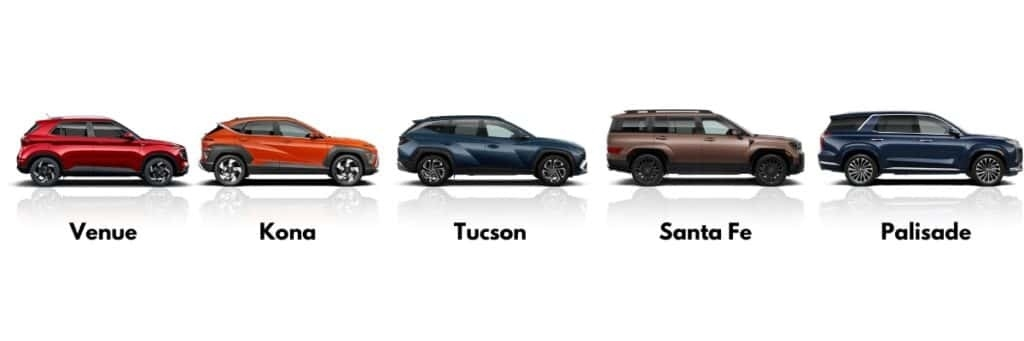
2026 Hyundai SUV lineup including Kona Tucson Santa Fe Palisade and Ioniq 5 at McCarthy Hyundai of Topeka in Topeka Kansas

Summary: Hyundai's 2026 SUV lineup is one of the most impressive in the industry, spanning from the compact and efficient Kona to the fully redesigned three-row Palisade, with electrified options at every level from the Tucson Hybrid and Santa Fe Plug-In Hybrid to the long-range Ioniq 5. Choosing the right one comes down to understanding your lifestyle, your priorities, and what you'll actually ask your SUV to do every day. This guide breaks down each model so Topeka drivers can find the perfect fit. Browse the full lineup at McCarthy Hyundai of Topeka.

Introduction: So Many Great Options, One Right Answer for You

Hyundai's SUV lineup in 2026 covers more ground than ever before. Whether you're a solo commuter who values fuel efficiency and easy parking, a growing family that needs three rows and serious cargo space, an adventurer who wants off-road capability without a truck-sized price tag, or a driver ready to make the switch to electric, there is a Hyundai SUV purpose-built for your life.

The challenge isn't finding a good option. It's identifying which of Hyundai's genuinely excellent models fits your specific combination of needs, budget, and driving habits most accurately. According to J.D. Power, one of the leading automotive quality research firms, Hyundai ranks among the top brands in overall vehicle dependability and initial quality, making any model in the lineup a strong starting point for long-term satisfaction.

Let's walk through each Hyundai SUV available for 2026 and identify exactly who each one is built for.

2026 Hyundai Kona and Kona Hybrid: Efficient, Compact, and City-Ready

If you want a compact SUV that's effortless to maneuver in tight spaces, genuinely fuel-efficient, and packed with more technology than you'd expect for the price, the 2026 Hyundai Kona is where to start your search. Kelley Blue Book named it the Subcompact SUV Best Buy Award winner for 2026, praising its stylish design, competitive warranty, and a surprisingly roomy interior that consistently outperforms expectations for a vehicle of its size.

The Kona's compact footprint makes campus parking, downtown Topeka errands, and tight neighborhood streets far less stressful than they would be in a larger vehicle. Despite its smaller exterior, it offers 25.5 cubic feet of cargo space behind the rear seats, expandable to 63.7 cubic feet with the rear seats folded, handling everything from a grocery run to a weekend camping trip without complaint.

The base 2026 Kona uses a 2.0-liter four-cylinder producing 147 horsepower and achieves up to 31 MPG combined on the base trim with front-wheel drive. Upgrading to the SEL Premium or Limited brings a turbocharged 1.6-liter engine producing 190 horsepower for a noticeably more spirited character. HTRAC AWD is available for added confidence in Kansas winter conditions.

The Kona Electric is also available for buyers ready to go fully electric in a subcompact package, with a range that suits most daily driving needs without requiring a full-size EV investment.

The Kona is the right choice if you:

  • Drive primarily in city or suburban settings and value easy parking
  • Want maximum fuel efficiency in a small SUV format
  • Are buying your first SUV and want an affordable, feature-rich entry point
  • Prefer a compact vehicle that doesn't feel cramped inside

Starting MSRP: approximately $25,350. Browse available Kona trims in our new Hyundai inventory.

2026 Hyundai Tucson and Tucson Hybrid: The Versatile All-Rounder

The 2026 Hyundai Tucson is one of Hyundai's most popular models for good reason. It occupies the ideal middle ground between the compact Kona and the larger Santa Fe, offering enough space for a small family's everyday needs without the bulk or cost of a midsize model. Its combination of practicality, refined ride quality, and standard technology makes it one of the most well-rounded compact SUVs on the market.

The Tucson is available with three distinct powertrain options in 2026, giving buyers genuine flexibility to match their priorities:

  • Standard 2.5-liter four-cylinder producing 187 horsepower, paired with an 8-speed automatic, achieving an EPA-estimated 26 MPG city and 33 MPG highway with FWD
  • Tucson Hybrid using a 1.6-liter turbocharged engine paired with an electric motor for 226 horsepower combined, targeting approximately 38 to 42 MPG combined, making it one of the most fuel-efficient compact SUVs available and an excellent choice for Topeka commuters
  • Tucson Plug-In Hybrid (PHEV) offering an electric-only driving range for short daily trips, combined with hybrid efficiency for longer drives, producing 261 horsepower combined

Standard safety technology across all 2026 Tucson trims includes Hyundai's full SmartSense suite with Forward Collision-Avoidance Assist, Blind-Spot Collision Warning, Lane Keeping Assist, and Smart Cruise Control with Stop and Go. The Tucson also received a 5-star overall safety rating from NHTSA for the current generation.

HTRAC AWD is available across all powertrain configurations, providing added traction and confidence for Kansas drivers navigating wet or icy roads in winter months. Cargo space is a competitive 38 to 41 cubic feet behind the rear seat, with a comfortable cabin that makes longer drives genuinely enjoyable for all five passengers.

The Tucson is the right choice if you:

  • Want a compact SUV with more space than the Kona but without midsize bulk
  • Are interested in hybrid or plug-in hybrid efficiency for a daily commute
  • Need a balance of practicality, safety, and technology without a premium price
  • Want AWD availability for Kansas winters without paying for a larger vehicle

Starting MSRP: approximately $29,450 (standard). Check our new vehicle specials for current Tucson Hybrid and PHEV offers.

2026 Hyundai Santa Fe and Santa Fe Hybrid: Comfort, Space, and Near-Premium Quality

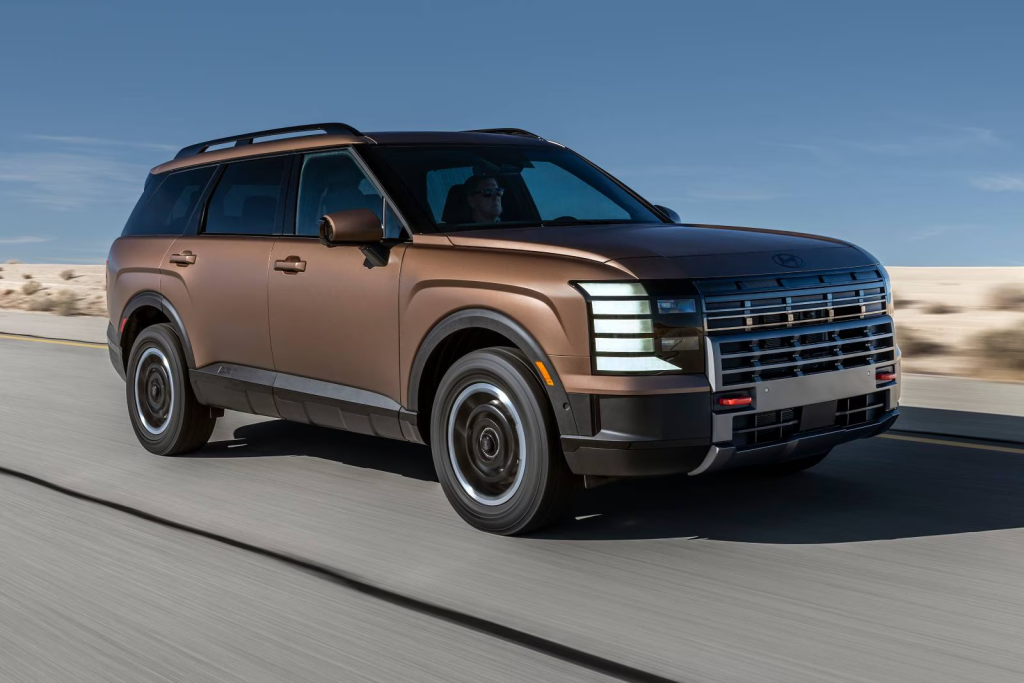
The 2026 Hyundai Santa Fe is the right answer for drivers who want more than a compact SUV can offer but aren't ready to step up to a full three-row vehicle. U.S. News and World Report calls it "a standout value" that costs thousands less than comparable midsize competitors while delivering equivalent or better performance, cargo space, and a technology package that frequently exceeds expectations for its price class.

The Santa Fe is available with seating for six or seven passengers across three rows, which is a genuinely meaningful distinction from the Tucson. While the third row is better suited for children than tall adults, it provides the seating flexibility that growing families increasingly need without requiring a step up to the Palisade's price range.

For 2026, the Santa Fe received a key mechanical upgrade: the previous dual-clutch transmission on gas models has been replaced by a new conventional 8-speed automatic, significantly improving smoothness and drivability in everyday conditions. The standard turbocharged 2.5-liter engine produces 277 horsepower and 311 lb-ft of torque, giving the Santa Fe noticeably more punch than most midsize competitors. Towing capacity reaches up to 3,500 pounds, enough for a boat or small camper for Kansas lake weekends.

The Santa Fe Hybrid delivers 231 combined horsepower and targets real-world efficiency in the low-to-mid 30s MPG, while the Santa Fe Plug-In Hybrid adds electric-only range for short daily trips. The dual 12.3-inch curved display setup, standard across most trims, and the Santa Fe's available premium interior materials give it a distinctly upscale character that belies its mainstream price point.

The Santa Fe XRT trim adds a more rugged character with standard AWD, all-terrain tires, Terrain Mode settings (Mud, Snow, Sand), and distinctive cladding for drivers who want off-road credibility alongside midsize practicality.

The Santa Fe is the right choice if you:

  • Want more power and space than the Tucson without moving to a full three-row vehicle
  • Need occasional third-row seating for growing or multigenerational families
  • Want a near-premium interior feel without a luxury brand price
  • Need to tow a boat, trailer, or camper on weekends
  • Are interested in hybrid or PHEV efficiency in a midsize package

Starting MSRP: $36,400. Schedule a Santa Fe test drive at McCarthy Hyundai of Topeka today.

2026 Hyundai Palisade and Palisade Hybrid: Maximum Space, Comfort, and Family Capability

The 2026 Hyundai Palisade stands at the top of Hyundai's SUV lineup, and this year it arrives fully redesigned for its second generation with improvements across every dimension that matters to three-row SUV buyers. If you regularly travel with the whole family, host carpools, or simply need the kind of space and comfort that makes long road trips feel genuinely relaxing rather than endured, the Palisade is in a class of its own for its price range.

The redesigned 2026 Palisade is 2.5 inches longer overall with a 2.7-inch longer wheelbase, translating directly into more usable space for second and third-row passengers. Second-row legroom now reaches 43 inches, and the third row provides 32.1 inches, making the Palisade one of the most genuinely adult-friendly three-row SUVs available anywhere near its price point. Seating accommodates seven or eight passengers depending on configuration, with available one-touch sliding second-row captain's chairs for effortless third-row access.

Cargo versatility is equally impressive: 19.1 cubic feet behind the third row, 46.3 cubic feet with the third row folded, and a maximum of 86.7 cubic feet with all rear seats down. Available power-folding rear seats make reconfiguring the interior a one-touch operation.

For 2026, the Palisade also introduces the brand's first-ever hybrid powertrain option, producing approximately 329 horsepower from a 2.5-liter turbocharged hybrid system and targeting up to 34 MPG combined with an estimated 619-mile driving range on a full tank. The standard 3.5-liter V6 produces 287 horsepower and manages 18 MPG city and 24 MPG highway with AWD. The brand-new XRT Pro trim adds genuine off-road capability with extra ground clearance, all-terrain tires, standard AWD, and a terrain management system for adventurous families who don't want to trade practicality for capability.

Inside, available quilted Nappa leather, dual 12.3-inch panoramic displays, a Bose 14-speaker audio system, available Relaxation Seats, and a factory-installed dashcam give the top Palisade trims a near-luxury feel at a fraction of what competing luxury three-row SUVs charge.

The Palisade is the right choice if you:

  • Regularly need to seat seven or eight passengers comfortably
  • Want the most space, comfort, and capability in Hyundai's lineup
  • Are looking for a three-row alternative to a minivan with significantly more style
  • Want a hybrid powertrain option in a large three-row SUV
  • Need serious towing capability alongside family-hauling versatility

Starting MSRP: $43,035. Browse available Palisade and Palisade Hybrid trims in our new inventory.

2026 Hyundai Ioniq 5: Electric Innovation for the Forward-Thinking Driver

For drivers who are ready to make the switch to fully electric transportation, the 2026 Hyundai Ioniq 5 remains one of the most compelling arguments for EV ownership available in any segment. It earned a Top Safety Pick+ from the IIHS in 2026 and continues to be recognized as one of the most thoughtfully designed electric crossovers on the market.

Built on Hyundai's 800-volt E-GMP architecture, the Ioniq 5 supports a peak DC fast charging rate of up to 350 kW, allowing it to charge from 10% to 80% in as little as 18 minutes on a compatible charger. With a maximum range of up to 318 miles on the long-range rear-wheel drive configuration, the Ioniq 5 handles most Kansas driving scenarios confidently, and the 2026 model includes a NACS charging port for compatibility with the Tesla Supercharger network, significantly expanding access to fast charging stations across the state and country.

The Ioniq 5 is available in Standard Range and Long Range configurations, with rear-wheel drive or all-wheel drive. The dual-motor AWD configuration produces 320 horsepower and can accelerate from 0 to 60 mph in under 5 seconds. Vehicle-to-Load (V2L) capability lets you power external devices and appliances directly from the battery, a genuinely practical feature for camping, job sites, or emergency power during outages.

Inside, the Ioniq 5's ultra-wide cabin with a flat floor creates a lounge-like atmosphere unlike any conventional SUV. The sliding center console, reclining front seats, and available augmented reality head-up display give it a technology-forward feel that sets it apart from the segment.

The Ioniq 5 is the right choice if you:

  • Are ready to go fully electric and want one of the most capable EVs available
  • Drive primarily within Kansas and want a long-range vehicle that handles occasional road trips
  • Want access to fast charging at the Tesla Supercharger network via NACS
  • Value forward-thinking design and technology in a crossover SUV format
  • Want Vehicle-to-Load capability for outdoor adventures or emergency backup power

Starting MSRP: approximately $44,000. Learn about available EV incentives through our financing center at McCarthy Hyundai of Topeka.

Hyundai SUV Comparison: Which One Fits Your Life?

ModelStarting MSRPSeatingBest ForPowertrain Options
Kona~$25,3505City driving, first SUV, budget efficiencyGas, Electric (Kona EV)
Tucson~$29,4505Compact families, commuters, hybrid efficiencyGas, Hybrid, PHEV
Santa Fe$36,4006 or 7Growing families, towing, premium feelGas, Hybrid, PHEV
Palisade$43,0357 or 8Large families, three-row comfort, max spaceGas (V6), Hybrid
Ioniq 5~$44,0005EV adopters, tech-forward drivers, long rangeFully Electric (RWD and AWD)

Finding the Best Value on a Hyundai SUV in Topeka

Hyundai's SUVs are consistently recognized for delivering more standard features, better warranty coverage, and stronger overall value than most comparably priced competitors. Every model in the lineup benefits from Hyundai's 10-year / 100,000-mile powertrain warranty, 5-year / 60,000-mile bumper-to-bumper coverage, and Bluelink+ connected services at no annual subscription cost for original owners of 2024 and newer models.

You can stretch your budget even further by checking our current new vehicle specials at McCarthy Hyundai of Topeka, where we regularly offer incentives and promotional financing rates on popular models. If a new vehicle isn't in your budget right now, our Hyundai Certified Pre-Owned program provides quality pre-owned SUVs that have passed a rigorous multi-point inspection and carry extended warranty protection for additional peace of mind.

Why Choose McCarthy Hyundai of Topeka?

Choosing the right Hyundai SUV is easier when you have a knowledgeable team walking you through the options without pressure or confusion. McCarthy Hyundai of Topeka has earned a 4.6-star rating from over 1,700 Google reviews from real customers in Topeka and across northeast Kansas, built on a simple commitment to honest, customer-first service at every stage of the process.

  • Full lineup availability: We stock new 2026 Kona, Tucson, Santa Fe, Palisade, and Ioniq 5 models, giving you the opportunity to compare multiple vehicles in a single visit.
  • No-pressure buying experience: Our team's goal is to help you find the right vehicle, not the most expensive one. We take the time to understand your needs and present options that genuinely fit.
  • Competitive financing: Our finance team works with a broad lender network to find the best available rates. Apply online before your visit to streamline the process.
  • Used and CPO options: Browse our used inventory and Certified Pre-Owned vehicles for quality Hyundai SUVs at accessible price points.
  • Expert service department: Our factory-trained technicians keep your Hyundai performing at its best long after purchase. Check our service and parts specials for ongoing maintenance savings.
  • Conveniently located: Find us at 2920 S Kansas Ave, Topeka, KS 66611.

Conclusion: The Right Hyundai SUV Is the One That Fits Your Life

Hyundai's 2026 SUV lineup is one of the most thoughtfully constructed in the industry, with a genuinely purpose-built option for every type of driver. The compact and efficient Kona for city-focused buyers. The versatile Tucson for commuters and small families who want hybrid efficiency. The powerful and spacious Santa Fe for growing families who want near-premium quality without a luxury price. The fully redesigned Palisade for large families who need three-row comfort and capability as standard. And the forward-thinking Ioniq 5 for drivers ready to embrace fully electric transportation.

Whatever your driving life looks like in Topeka and across Kansas, McCarthy Hyundai of Topeka has the inventory, the team, and the expertise to help you find your perfect match.

Browse our full new Hyundai SUV inventory, explore our new vehicle specials, or schedule a test drive at McCarthy Hyundai of Topeka today.

Frequently Asked Questions: Which Hyundai SUV Is Right for You?

What is the smallest Hyundai SUV available in 2026?

The 2026 Hyundai Kona is the smallest SUV in Hyundai's lineup and the most affordable, starting at approximately $25,350. It's a subcompact crossover that is particularly well-suited to city driving, tight parking, and buyers looking for maximum efficiency in an SUV format.

Which 2026 Hyundai SUV gets the best fuel economy?

The 2026 Hyundai Tucson Hybrid achieves approximately 38 to 42 MPG combined, making it the most fuel-efficient non-electric SUV in the lineup. The Santa Fe Hybrid delivers mid-30s MPG in a larger package, and the Palisade Hybrid targets 34 MPG combined in a three-row SUV.

Which Hyundai SUV seats the most passengers?

The 2026 Hyundai Palisade seats seven or eight passengers across three rows depending on whether second-row captain's chairs or a bench seat is selected. The 2026 Santa Fe also offers an optional third row and seats six or seven passengers.

Is the 2026 Hyundai Ioniq 5 a good choice for Kansas drivers?

Yes. The Ioniq 5 offers up to 318 miles of range and supports 350 kW peak DC fast charging, making it practical for most Kansas driving needs. The 2026 model includes a NACS port for Tesla Supercharger access, which significantly expands charging network options across the state.

Which Hyundai SUV is best for towing?

The 2026 Hyundai Palisade has the highest towing capacity in the lineup at 5,000 pounds with the hybrid powertrain or V6 AWD configuration. The Santa Fe tows up to 3,500 pounds, suitable for boats and utility trailers common in the Kansas lake region.

What Hyundai SUVs are available as hybrids in 2026?

The 2026 Hyundai Tucson, Santa Fe, and Palisade are all available with hybrid or plug-in hybrid powertrains. The Tucson and Santa Fe also offer PHEV variants with electric-only driving range for short daily trips. The Kona and Ioniq 5 are available as fully electric models.

Can I compare multiple Hyundai SUVs in one visit at McCarthy Hyundai of Topeka?

Yes. We stock the full Hyundai SUV lineup and encourage buyers to test drive multiple models before deciding. Schedule your test drive online or call (785) 267-2800. We're located at 2920 S Kansas Ave, Topeka, KS 66611.

Posted in:

Related Posts

Winter tires cleaned and bagged for seasonal storage in Topeka KS

Where and How to Store Your Winter Tires in Topeka After Removing Them

Brief Summary / Excerpt: Once spring temperatures rise in Topeka, it is time to remove winter tires and store them correctly. Proper winter tire storage helps protect rubber, preserve tread life, prevent cracking, and keep your tires ready for next winter. Introduction When spring arrives in Topeka and temperatures begin to stay consistently warmer, many drivers start thinking about removing their winter tires. That is a smart move. Winter tires are designed for cold temperatures, snow, ice, and slush. Once warmer spring and summer weather sets in, keeping winter tires on your Hyundai can cause faster wear, reduced handling precision, and unnecessary tread loss. Removing winter tires is only half the job. The other half is storing them correctly. Poor tire storage can shorten tire life, dry out the rubber, contribute to cracking, and make your winter tires less effective when cold weather returns. The good news is that winter tire storage is not complicated. With the right cleaning, inspection, storage location, and positioning, you can help keep your tires in better condition for next season. If you want help with winter tire removal, tire inspection, rotation, or seasonal tire service, schedule an appointment through the McCarthy Hyundai of Topeka service center or review current service and parts specials. When Should Topeka Drivers Remove Winter Tires? A practical rule of thumb is to remove winter tires once temperatures are consistently above about 45°F and snow or ice is no longer a regular concern. In northeast Kansas, that timing can vary depending on the year. Some springs warm up quickly, while others bring late cold snaps or unexpected winter weather. Winter tires are made with rubber compounds designed to stay flexible in cold weather. In warm temperatures, that softer compound can wear more quickly. Driving on winter tires all spring and summer can shorten their useful life and reduce the traction you need when winter returns. If you are not sure whether it is time to switch, the McCarthy Hyundai of Topeka service team can inspect your tires and help you decide whether all-season or summer tires are the better next step for the warmer months. Why Proper Winter Tire Storage Matters Tires may look tough, but rubber is sensitive to heat, sunlight, moisture, ozone, chemicals, and poor storage conditions. The National Highway Traffic Safety Administration notes that exposure to sunlight, warmer climate, poor storage, and poor maintenance can contribute to tire aging. Michelin also recommends storing tires indoors in a clean, cool, dark location away from direct sunlight, heat sources, and ozone-generating equipment such as electric motors or generators. You can review Michelin’s tire storage guidance on its tire storage tips page. Good storage helps protect your tires from: UV damage Dry rot and cracking Ozone exposure Moisture damage Flat spotting or deformation Contamination from oil, gasoline, solvents, or chemicals Unnecessary aging during the off-season Step 1: Decide Who Will Store Your Tires Before removing winter tires, decide whether you will store them yourself or use professional tire storage. Both options can work well if the tires are handled properly. Professional Tire Storage Professional storage can be useful if you do not have space at home, live in an apartment, or want someone else to handle the lifting and seasonal changeover. A professional service may remove the tires, inspect them, store them, and reinstall them when winter returns. This option is convenient because: You do not need garage or basement space The tires are handled by service professionals Seasonal swaps can be scheduled in advance Tires can be inspected before storage and installation You avoid transporting heavy tires yourself At-Home Tire Storage At-home storage can also work if you have the right space. A cool, dry, dark indoor location is best. A basement or climate-stable storage area is usually better than an outdoor shed or hot garage, though an indoor garage is still better than leaving tires outside. If you store tires yourself, you will need to inspect, clean, dry, bag, label, and position them correctly. Step 2: Inspect Tires Before Storing Them Do not store winter tires without inspecting them first. Once tires are off the vehicle, you have a good opportunity to check condition, tread depth, and wear patterns. What to Inspect Tread depth Uneven wear Cracks in the sidewall Bulges or bubbles Punctures or embedded objects Damage near the bead area Dry rot or weather checking Wheel damage if tires are mounted on rims A tread depth gauge is the most accurate way to measure tread. Winter tires need enough tread depth to grip snow and slush effectively. If the tread is low, the tires may not be worth storing for another season. Uneven wear can also point to alignment, suspension, or tire pressure concerns. If one tire is more worn than the others, have a technician inspect the set before next winter. Step 3: Clean the Tires Thoroughly Winter tires collect road salt, brake dust, sand, mud, grime, and moisture. Storing them dirty can allow contaminants to sit against the rubber for months. Clean each tire before storage using water, mild soap, and a soft brush if needed. Avoid harsh chemicals, petroleum-based cleaners, or tire shine products before storage unless the product is specifically approved for that purpose. Cleaning Checklist Rinse off salt, mud, and debris Clean tread grooves Remove stones from the tread Wash wheels if tires are mounted Dry tires completely before bagging Inspect again after cleaning Drying is important. Sealing moisture inside a tire bag can encourage unwanted odors, corrosion on wheels, or other storage issues. Step 4: Bag or Wrap Each Tire Once the tires are clean and dry, place each tire in its own opaque tire storage bag or heavy-duty plastic bag. Try to remove as much air as practical before sealing the bag. This helps reduce exposure to air and ozone during storage. Specialized tire storage bags are convenient because they are sized for tires and often include handles. Heavy-duty contractor bags can also work if they are clean, opaque, and sealed well. Bagging helps protect tires from: Dust Sunlight Air exposure Ozone exposure Garage grime Accidental contact with chemicals Before sealing, make sure tires are fully dry. Clean, dry, individually bagged tires are much easier to store safely. Step 5: Choose the Right Storage Location The ideal tire storage location is cool, dry, dark, and indoors. Avoid storing tires outdoors, even if they are covered. Outdoor storage exposes tires to temperature swings, moisture, sunlight, and ozone, all of which can shorten tire life. Best Places to Store Winter Tires Climate-stable basement Indoor storage room Clean garage away from heat and sunlight Professional tire storage facility Places to Avoid Outdoors Direct sunlight Hot attic Damp basement corner Near furnaces or hot pipes Near electric motors or generators Near gasoline, oil, solvents, or chemicals Ozone is especially important. Equipment such as electric motors, generators, and some appliances can contribute to ozone exposure, which can accelerate rubber cracking. Keep tires away from those sources whenever possible. Step 6: Store Tires in the Correct Position How you position winter tires depends on whether they are mounted on wheels. If Tires Are Mounted on Wheels If your winter tires are mounted on rims, you can stack them horizontally or hang them from proper wheel hooks. Stacking mounted tires is common and generally acceptable when they are clean, dry, bagged, and stored in a stable location. For mounted tires: Stack them flat, or hang them by the wheels Do not place heavy objects on top of them Keep them off damp concrete if possible Use cardboard, wood, or a tire rack as a barrier If Tires Are Not Mounted on Wheels If your tires are not mounted on rims, store them upright on their tread. Do not hang unmounted tires because hanging can distort the tire shape over time. For unmounted tires: Store upright on a rack if possible Rotate them slightly every month if practical Avoid stacking for long periods if unmounted Do not hang them from hooks The goal is to prevent distortion and protect the tire shape during several months of storage. Step 7: Label Tire Positions Before Storage Before storing the tires, label where each tire was installed on the vehicle. Use labels such as front left, front right, rear left, and rear right. This helps with future tire rotation planning. When winter returns, a technician can reinstall the tires in a way that supports more even wear, depending on tread condition and rotation pattern. Labeling is especially helpful if you have all-wheel drive because even tire wear matters for traction and drivetrain health. Step 8: Check Tire Age Before Reusing Them Tires age even when they are not being driven. Rubber changes over time, and old tires may become less safe even if tread depth looks acceptable. NHTSA recommends checking the tire identification number on the sidewall to determine tire age and following manufacturer guidance for replacement. Michelin recommends closely inspecting tires that have been stored for several years and notes that age guidance applies whether a tire has been used or stored. If your winter tires are several years old, have them professionally inspected before reinstalling them. Quick Winter Tire Storage Checklist Step What to Do Why It Matters Inspect Check tread, sidewalls, wear, and damage Confirms tires are worth storing Clean Remove salt, dirt, stones, and brake dust Protects rubber and wheels during storage Dry Let tires dry fully before bagging Helps prevent trapped moisture Bag Use individual opaque bags Reduces air, light, and ozone exposure Store Indoors Choose a cool, dry, dark location Helps slow rubber aging Position Correctly Stack or hang mounted tires; stand unmounted tires upright Helps prevent deformation Label Mark original tire positions Supports future rotation planning Need Tire Service in Topeka? Whether you need winter tire removal, tire inspection, tire rotation, alignment service, replacement tires, or seasonal maintenance, McCarthy Hyundai of Topeka can help. Helpful resources include: Schedule tire service through the McCarthy Hyundai of Topeka service center Review current Hyundai service and parts specials Browse new Hyundai vehicles in Topeka Explore used cars for sale in Topeka Shop certified pre-owned Hyundai vehicles Learn about Hyundai financing options Schedule a Hyundai test drive in Topeka Key Takeaways Remove winter tires when temperatures are consistently above about 45°F and winter weather is no longer expected. Inspect tires for wear, cracks, bulges, punctures, and tread depth before storing them. Clean off road salt, dirt, stones, and brake dust before storage. Store winter tires indoors in a cool, dry, dark place. Keep tires away from sunlight, heat, ozone-producing equipment, and chemicals. Bag each tire individually after it is fully dry. Store mounted tires stacked or hung; store unmounted tires upright. Why Choose McCarthy Hyundai of Topeka? Seasonal tire care is easier when you have a local service team that understands Hyundai vehicles and Kansas driving conditions. McCarthy Hyundai of Topeka can help with tire inspections, rotations, seasonal tire swaps, alignment checks, and maintenance designed to keep your vehicle ready for the road. Located at 2920 S Kansas Ave, Topeka, KS 66611, McCarthy Hyundai of Topeka serves drivers throughout Topeka and northeast Kansas with Hyundai service, new vehicles, used vehicles, certified pre-owned options, financing resources, and ownership support. Drivers choose McCarthy Hyundai of Topeka for: Hyundai service support in Topeka Tire inspections and seasonal tire guidance Service and parts specials that may help reduce maintenance costs New, used, and certified pre-owned Hyundai options Financing resources for shoppers considering their next vehicle A local team focused on customer care and long-term vehicle confidence Learn more about McCarthy Hyundai of Topeka, schedule service through the service center, or review available service and parts specials. Conclusion Winter tires are an investment in cold-weather traction, so it makes sense to protect them during the off-season. Cleaning, inspecting, bagging, and storing them correctly can help preserve their performance and extend their useful life. Do not leave winter tires outside, stacked in direct sunlight, exposed to chemicals, or stored near heat and ozone sources. A cool, dry, dark indoor location is the best choice. When winter returns, have the tires inspected before reinstalling them so you know they are ready for snow, ice, and freezing temperatures. To schedule tire service in Topeka, contact McCarthy Hyundai of Topeka at (785) 267-2800 or visit the McCarthy Hyundai of Topeka service center. Frequently Asked Questions Where should I store winter tires after removing them? Store winter tires indoors in a cool, dry, dark place away from sunlight, heat, moisture, ozone-producing equipment, and chemicals. Can winter tires be stored outside? Winter tires should not be stored outside for long periods. Outdoor storage exposes tires to sunlight, moisture, heat, and temperature changes that can shorten tire life. Should I clean winter tires before storing them? Yes. Clean off road salt, dirt, brake dust, stones, and grime before storage. Let the tires dry completely before bagging them. Should tires be stored standing up or stacked? If tires are mounted on wheels, they can be stacked or hung by the wheels. If tires are not mounted on wheels, store them upright and avoid hanging them. Should winter tires be bagged for storage? Yes. Bagging each clean, dry tire in an opaque airtight or nearly airtight bag can help reduce exposure to air, light, dust, and ozone. Where can I schedule seasonal tire service in Topeka? You can schedule seasonal tire service through the McCarthy Hyundai of Topeka service center.

Dark blue 2026 Hyundai Palisade on a red carpet after winning AJAC Canadian Utility Vehicle of the Year

2026 Hyundai Palisade Wins AJAC Canadian Utility Vehicle of the Year

Brief Summary / Excerpt: The 2026 Hyundai Palisade earned AJAC Canadian Utility Vehicle of the Year honors, adding another major award to Hyundai’s redesigned three-row SUV. With a new 287-horsepower 3.5L V6, spacious seating for up to eight, bold styling, advanced technology, and family-focused comfort, the Palisade is a standout choice for Topeka SUV shoppers. Introduction The 2026 Hyundai Palisade has earned major recognition from automotive experts, winning 2026 Canadian Utility Vehicle of the Year from the Automobile Journalists Association of Canada. According to Hyundai’s official announcement, the award was presented at the Canadian Car of the Year Awards in Toronto, and AJAC’s own winners list also names the Hyundai Palisade as the 2026 Canadian Utility Vehicle of the Year. That recognition matters because the Palisade competes in one of the most demanding vehicle segments: three-row family SUVs. Shoppers in this category expect comfort, safety, cargo space, technology, performance, long-term value, and everyday usability. The Palisade has to do more than look good. It has to work for commuting, school schedules, road trips, weekend errands, and family life. For drivers in Topeka, the award is another reason to give the 2026 Palisade a closer look. Hyundai has redesigned its flagship SUV with a more refined cabin, a new 3.5L V6 engine, seating for seven or eight passengers, generous cargo space, and available family-friendly technology. You can explore current options through McCarthy Hyundai of Topeka’s new Hyundai inventory or schedule a Hyundai test drive to experience the Palisade in person. What the AJAC Award Means for SUV Shoppers The AJAC Canadian Utility Vehicle of the Year award is not just a marketing headline. It reflects evaluation by automotive journalists who compare vehicles across real-world categories such as design, performance, practicality, value, and overall driving experience. Hyundai’s official Palisade AJAC award announcement notes that the Palisade captured the 2026 Canadian Utility Vehicle of the Year title. The AJAC Canadian Car of the Year winners page also lists the Hyundai Palisade as the 2026 Canadian Utility Vehicle of the Year. For Topeka shoppers, this outside recognition can be helpful when comparing three-row SUVs. It does not replace your own test drive, budget review, or feature comparison, but it does show that the Palisade has been evaluated seriously by automotive professionals and recognized in a competitive field. A New 3.5L V6 With Confident Power The 2026 Hyundai Palisade introduces a new 3.5L V6 engine rated at 287 horsepower and 260 lb-ft of torque, according to Hyundai. It is paired with an 8-speed automatic transmission and is available with front-wheel drive or HTRAC all-wheel drive. For a family SUV, that kind of power is important. Three-row SUVs often carry passengers, luggage, sports gear, groceries, strollers, pets, or road-trip supplies. The Palisade’s V6 is designed to deliver smooth acceleration for everyday driving, highway merging, and longer trips. Performance highlights include: 3.5L V6 engine 287 horsepower 260 lb-ft of torque 8-speed automatic transmission Available HTRAC all-wheel drive Available Tow Mode on select trims Available XRT PRO trim for adventure-focused shoppers If you frequently drive with a full cabin or travel on Kansas highways, this blend of refinement and power can make a meaningful difference. Three-Row Comfort for Real Family Life The Palisade has always been known for its family-friendly interior, and the 2026 model continues that strength. Hyundai lists seating for seven or eight passengers, depending on configuration. Available second-row captain’s chairs provide easier access and added comfort, while a second-row bench can maximize passenger capacity. This flexibility is one of the Palisade’s biggest advantages. Some families want maximum seating. Others prefer captain’s chairs for comfort and easier third-row access. The Palisade gives shoppers options based on how they actually use their SUV. The cabin is well-suited for: Growing families Carpooling Road trips School and sports schedules Traveling with grandparents or friends Drivers who want SUV space without moving into a full-size truck-based vehicle For families comparing SUVs in Topeka, the Palisade’s seating layout is worth testing in person. Sit in all three rows, try the cargo area, and check how easy it is to load child seats, luggage, and everyday gear. Cargo Space Built for Busy Households A three-row SUV needs more than passenger room. It also needs cargo flexibility. Hyundai lists the 2026 Palisade with 86.7 cubic feet of cargo space behind the front seats when the second and third rows are folded, and 46.3 cubic feet behind the second row with the third row folded. That gives the Palisade practical space for everyday needs and longer trips. Whether you are packing for a family vacation, loading groceries, bringing sports gear, or helping someone move, the Palisade is designed to adapt. Common cargo uses include: Family luggage Sports bags and equipment Strollers and child gear Grocery and warehouse-store hauls Camping supplies Pet crates and pet supplies School projects and backpacks Home improvement items For many families, this is where a three-row SUV proves its value. The Palisade gives you passenger capacity when you need it and large cargo space when the seats are folded. Interior Styling That Feels Premium The AJAC recognition also reflects what many shoppers notice quickly: the Palisade feels more upscale than many expect from a mainstream three-row SUV. Hyundai has placed a clear emphasis on cabin design, comfort, and ease of use. The 2026 Palisade interior is designed around a wide, modern dashboard, intuitive controls, and available premium materials. Higher trims may include luxury-inspired touches such as available relaxation seats, premium seating surfaces, upgraded audio, and advanced convenience features. Interior highlights may include: Available 12.3-inch digital display technology Available second-row captain’s chairs Available premium seating materials Available heated and ventilated seating Available memory settings Available power-folding seating features Multiple USB charging options Family-friendly storage throughout the cabin Feature availability varies by trim, so it is important to compare the exact Palisade configuration you are considering. Technology Designed for Modern Families Family SUVs now serve as mobile command centers. Drivers need navigation, smartphone connectivity, charging access, safety alerts, entertainment, and convenient controls. The 2026 Palisade supports that kind of connected driving experience with a strong technology package. Depending on trim, available features may include: Wireless Apple CarPlay and Android Auto compatibility Hyundai Digital Key 2 Premium Available navigation Available premium audio Available Surround View Monitor Available Blind-Spot View Monitor Available connected services Multiple charging ports for passengers These features can make daily driving easier, especially for families juggling multiple phones, busy schedules, and long drives across Kansas. Safety and Driver Assistance Safety is a major reason families shop three-row SUVs, and the Palisade offers a broad range of Hyundai SmartSense driver-assistance features. Hyundai explains its safety technologies on the official Hyundai SmartSense page. Depending on trim and equipment, Palisade safety features may include: Forward Collision-Avoidance Assist Lane Keeping Assist Lane Following Assist Blind-Spot Collision Warning Rear Cross-Traffic Collision-Avoidance Assist Safe Exit Assist or Safe Exit Warning, depending on configuration Smart Cruise Control Highway Driving Assist availability Parking assistance and camera systems on select trims These systems are designed to assist the driver, not replace attentive driving. Weather, lane markings, sensor visibility, and traffic conditions can affect how driver-assistance features perform. Shoppers can also compare model-specific safety information through the NHTSA vehicle ratings tool and the IIHS ratings database. Built for Topeka Families and Kansas Roads The Palisade’s award-winning formula makes sense for families in Topeka and across northeast Kansas. A good local family SUV needs to be comfortable in town, confident on the highway, useful during winter, and roomy enough for everyday life. The Palisade fits a wide range of needs: Daily commuting around Topeka School drop-offs and pickups Sports practices and weekend tournaments Road trips to Kansas City, Lawrence, Manhattan, or beyond Family vacations Bad-weather driving with available HTRAC all-wheel drive Large cargo hauls with rear seats folded If you want a three-row SUV that feels refined but still practical, the Palisade is designed for exactly that role. More Recognition Beyond AJAC The AJAC Canadian Utility Vehicle of the Year award is not the only major recognition for the 2026 Palisade. Hyundai also announced that the all-new Palisade was named 2026 North American Utility Vehicle of the Year. That award is especially relevant for U.S. shoppers because it comes from the North American Car, Utility and Truck of the Year jury. For buyers comparing SUVs, awards are not the only factor, but they can help confirm that the Palisade is being taken seriously by expert evaluators in a highly competitive segment. Shopping for a Hyundai Palisade in Topeka If you are considering the 2026 Palisade, the best next step is to compare trims, seating configurations, drivetrain options, technology features, and available offers. McCarthy Hyundai of Topeka can help you review options based on your family’s needs and budget. Helpful shopping resources include: Browse new Hyundai vehicles in Topeka Explore used cars for sale in Topeka Shop certified pre-owned Hyundai vehicles Review new Hyundai vehicle specials Learn about Hyundai financing options Schedule a Hyundai test drive in Topeka Key Takeaways The 2026 Hyundai Palisade won AJAC Canadian Utility Vehicle of the Year. Hyundai also announced the Palisade as 2026 North American Utility Vehicle of the Year. The 2026 Palisade offers a new 287-horsepower 3.5L V6 engine. Seating for seven or eight passengers gives families useful flexibility. Hyundai lists up to 86.7 cubic feet of cargo space behind the front seats. Available HTRAC all-wheel drive can add confidence in changing Kansas weather. Advanced technology and Hyundai SmartSense features help make the Palisade a well-rounded three-row SUV. Why Choose McCarthy Hyundai of Topeka? When you are shopping for an award-winning three-row SUV, it helps to work with a local dealership team that can explain trims, features, financing, and service support clearly. McCarthy Hyundai of Topeka helps drivers compare Hyundai models and find the right vehicle for their family, budget, and lifestyle. Located at 2920 S Kansas Ave, Topeka, KS 66611, McCarthy Hyundai of Topeka serves drivers throughout Topeka and northeast Kansas with new Hyundai vehicles, used vehicles, certified pre-owned options, financing resources, and service after the sale. Drivers choose McCarthy Hyundai of Topeka for: Helpful Hyundai product knowledge New, used, and certified pre-owned Hyundai options Convenient test-drive scheduling Financing resources for different budgets Service support after the sale A local team focused on customer care Learn more about McCarthy Hyundai of Topeka, browse new Hyundai inventory, or schedule a Hyundai test drive. Conclusion The 2026 Hyundai Palisade’s AJAC Canadian Utility Vehicle of the Year win highlights what makes this SUV so compelling: a refined interior, strong three-row practicality, a new 287-horsepower V6, modern technology, available all-wheel drive, and the kind of thoughtful design families can appreciate every day. For Topeka shoppers looking for a three-row SUV that feels premium without losing everyday usefulness, the Palisade deserves a spot at the top of the test-drive list. To explore the award-winning 2026 Hyundai Palisade, contact McCarthy Hyundai of Topeka at (785) 267-2800, browse current new Hyundai vehicles in Topeka, or schedule a test drive. Frequently Asked Questions What award did the 2026 Hyundai Palisade win? The 2026 Hyundai Palisade won AJAC Canadian Utility Vehicle of the Year from the Automobile Journalists Association of Canada. Did the 2026 Hyundai Palisade win any U.S.-relevant awards? Yes. Hyundai also announced that the 2026 Palisade was named North American Utility Vehicle of the Year by the North American Car, Utility and Truck of the Year jury. What engine does the 2026 Hyundai Palisade have? The 2026 Hyundai Palisade offers a 3.5L V6 engine rated at 287 horsepower and 260 lb-ft of torque, paired with an 8-speed automatic transmission. How many people does the 2026 Palisade seat? The 2026 Hyundai Palisade offers seating for seven or eight passengers, depending on the seating configuration and trim. How much cargo space does the 2026 Hyundai Palisade have? Hyundai lists the 2026 Palisade with up to 86.7 cubic feet of cargo space behind the front seats when the second and third rows are folded. Does the 2026 Hyundai Palisade offer all-wheel drive? Yes. The 2026 Hyundai Palisade is available with HTRAC all-wheel drive for added traction confidence in changing road conditions. Where can I test drive a 2026 Hyundai Palisade in Topeka? You can schedule a 2026 Hyundai Palisade test drive through McCarthy Hyundai of Topeka.

Hyundai technician inspecting a car air conditioning system for summer service in Topeka

The 5 Most Common Car Air Conditioning Problems and How to Fix Them

Brief Summary / Excerpt: If your car A/C blows warm air, has weak airflow, makes strange noises, or only works sometimes, the issue could involve low refrigerant, a cooling fan, condenser damage, compressor failure, a clogged cabin air filter, or an electrical problem. Here is what Topeka drivers should know before summer heat arrives. Introduction Few things make a summer drive uncomfortable faster than a car air conditioning system that stops cooling. When temperatures climb in Topeka, a weak or broken A/C system can turn a short commute, school pickup, or road trip into a sweaty and frustrating experience. Modern vehicle climate control systems are more advanced than ever. Many newer Hyundai vehicles include automatic temperature control, multi-zone settings, cabin air filters, sensors, electronic controls, and, in hybrid or electric models, electric A/C compressors. That technology improves comfort, but it also means A/C problems can come from several different places. The good news is that most car air conditioning issues show warning signs before the system fails completely. Warm air, weak airflow, strange noises, bad smells, moisture inside the cabin, and inconsistent cooling are all clues that your vehicle needs attention. If your Hyundai A/C is not working the way it should, schedule service through the McCarthy Hyundai of Topeka service center. You can also review current service and parts specials before your appointment. How Does a Car A/C System Work? A vehicle air conditioning system cools the cabin by moving refrigerant through a sealed loop. As refrigerant changes pressure and temperature, it absorbs heat from inside the vehicle and releases that heat outside. Most automotive A/C systems include several major components: Compressor: Pressurizes and circulates refrigerant through the system. Condenser: Releases heat and condenses refrigerant into a high-pressure liquid. Receiver/drier or accumulator: Helps remove moisture and filter debris from the system. Expansion valve or orifice tube: Controls refrigerant flow into the evaporator. Evaporator core: Absorbs heat from cabin air before cooled air is blown through the vents. Blower motor: Pushes air through the HVAC system and into the cabin. Cabin air filter: Helps trap dust, pollen, and debris before air enters the cabin. Electrical controls and sensors: Help manage temperature, pressure, fan speed, and airflow direction. If one part stops working correctly, the entire system can lose cooling power. Because refrigerant handling is regulated, many A/C repairs should be performed by trained professionals. The U.S. Environmental Protection Agency explains that technicians who repair or service motor vehicle A/C systems for payment must be trained and certified under Clean Air Act Section 609 and use approved refrigerant handling equipment. 1. Refrigerant Leaks A refrigerant leak is one of the most common reasons a vehicle A/C system stops cooling properly. Refrigerant is the substance that allows the system to absorb and release heat. If the system is low, it cannot cool the cabin effectively. A properly operating A/C system is sealed, so refrigerant should not simply disappear. If the refrigerant level is low, there is likely a leak somewhere in the system. What Causes Refrigerant Leaks? Aging seals and O-rings Cracked or worn hoses Corrosion from moisture and road salt Loose fittings Condenser damage from road debris Vibration-related wear over time Signs of a Refrigerant Leak Warm air from the vents A/C cools briefly, then warms up Hissing sounds from the engine bay Oily residue around A/C lines or fittings Compressor cycling frequently A/C performance gradually gets worse How to Fix It The correct fix is not simply topping off the refrigerant. A technician should inspect the system, identify the leak, repair the failed component, evacuate and recharge the system to manufacturer specifications, and verify performance. DIY recharge kits may seem convenient, but they can cause problems if the system is overcharged, contaminated, or charged with the wrong refrigerant. Modern vehicles may use refrigerants such as R-1234yf rather than older R-134a, so the correct refrigerant and equipment matter. 2. Faulty Cooling Fan If your A/C cools while driving but blows warm air while idling or sitting at a stoplight, the condenser fan may be the issue. The condenser needs airflow to release heat. When your vehicle is moving, air naturally passes through the condenser. When you are parked or idling, the cooling fan helps move air across it. What Causes Cooling Fan Problems? Blown fuse Bad relay Failed fan motor Damaged fan blades Debris blocking the fan Faulty temperature or pressure sensor Wiring or connector issues Signs of a Cooling Fan Issue A/C works while driving but not when stopped Engine temperature rises while idling Fan does not turn on when A/C is running Warm air from vents in traffic Unusual fan noise from the front of the vehicle How to Fix It A technician can test the fan circuit, inspect relays and fuses, verify fan motor operation, and check for sensor or wiring issues. Depending on the problem, the fix may be as simple as a relay or as involved as replacing the fan assembly. 3. Blocked or Damaged Condenser The condenser sits near the front of the vehicle, which means it is exposed to bugs, dirt, leaves, road debris, rocks, salt, and minor impacts. If the condenser cannot release heat properly, the A/C system will struggle to cool the cabin. What Causes Condenser Problems? Road debris impact Clogged fins from bugs or dirt Corrosion from winter salt and moisture Internal blockage from system contamination Leaks from damaged tubes or fittings Signs of a Condenser Problem Warm air even when refrigerant level appears correct Poor cooling at low speeds Visible damage at the front of the condenser Oily residue near the condenser A/C pressure readings outside normal range How to Fix It Light external debris may be cleaned carefully, but damaged or leaking condensers usually need replacement. If the condenser is replaced, the system must be properly evacuated and recharged. If internal contamination is present, additional components may need inspection or flushing. 4. Failing A/C Compressor The compressor is often called the heart of the A/C system because it circulates refrigerant. If the compressor fails, the system cannot cool properly. Compressor problems can be mechanical or electrical. On some traditional gas vehicles, the compressor is driven by a belt and clutch. On many hybrid and electric vehicles, the compressor may be electrically powered, requiring specialized tools and procedures. What Causes Compressor Failure? Age and wear Low refrigerant operation Contaminated refrigerant or debris Faulty clutch or control circuit Electrical failure Lack of lubrication inside the system Signs of Compressor Trouble Loud clicking, grinding, or squealing noises A/C does not engage Intermittent cooling Warm air from vents Visible belt or pulley concerns on applicable systems Warning lights or diagnostic codes on some vehicles How to Fix It A technician will confirm whether the compressor is receiving the correct commands and whether the mechanical or electrical components are working. If the compressor has failed internally, replacement may be required. The system may also need inspection for debris, correct oil balance, and related component damage. 5. Electrical, Sensor, or Airflow Problems Modern A/C systems rely heavily on electronics. A single failed sensor, bad switch, blown fuse, control module issue, or weak blower motor can make the system behave unpredictably. Airflow problems are also common. Sometimes the A/C system is cooling correctly, but the air cannot move through the cabin because of a clogged cabin air filter, blower issue, or airflow door problem. Common Electrical and Airflow Causes Blown fuse Bad relay Faulty pressure sensor Failed temperature sensor Weak blower motor Stuck blend door or mode door Faulty control panel or touchscreen interface Loose or corroded wiring Clogged cabin air filter Signs of Electrical or Airflow Trouble No air from vents Air only blows on certain fan speeds A/C only works on some settings Temperature does not match the controls Clicking sounds behind the dashboard Weak airflow even when fan speed is high Musty smell from vents How to Fix It A technician can scan the system for diagnostic codes, test electrical circuits, inspect the blower motor, check fuses and relays, and inspect the cabin air filter. In some cases, the repair is simple. In others, the dashboard or HVAC housing may need deeper inspection. A restricted cabin air filter can reduce heating and air conditioning performance because it limits airflow through the HVAC system. Replacing the cabin air filter on schedule can help maintain airflow and comfort. Bonus Problem: Bad Smells From the A/C If your A/C cools but smells musty, sour, or stale, the issue may involve moisture buildup, mold or mildew on the evaporator, a dirty cabin air filter, or debris in the HVAC system. Odor problems may be improved by: Replacing the cabin air filter Cleaning the evaporator area with approved products Clearing debris from the cowl area Running the fan briefly after A/C use to help dry moisture Inspecting for water leaks or drain tube blockage If the smell is strong, persistent, or chemical-like, schedule an inspection rather than masking it with air fresheners. How to Prevent Car A/C Problems Some A/C failures happen without warning, but many can be reduced with regular maintenance and early diagnosis. A/C Maintenance Tips Run the A/C periodically, even in cooler months, to help keep seals lubricated. Replace the cabin air filter according to your maintenance schedule. Watch for changes in airflow, temperature, sound, or smell. Keep the condenser area clear of leaves, bugs, and debris. Have weak cooling inspected before the system stops working entirely. Do not ignore refrigerant leaks or oily residue near A/C components. Schedule spring A/C service before peak summer heat arrives. The U.S. Department of Energy notes that air conditioning can affect fuel economy in hot weather, and most A/C systems cool the vehicle faster while driving than while idling. You can read more in the Department of Energy’s fuel economy in hot weather guide. When Should You See a Professional? Some simple checks, such as replacing a cabin air filter or clearing leaves from the cowl area, may be manageable for experienced owners. But many A/C concerns require professional tools and training, especially when refrigerant is involved. Schedule service if you notice: A/C blows warm air Cooling is inconsistent Airflow is weak Unusual noises when A/C is on Bad smells from vents Water leaking into the cabin A/C only works while driving Dashboard warnings or climate control errors Waiting too long can allow a minor problem, such as a leak or restricted airflow, to become a more expensive repair. Schedule Hyundai A/C Service in Topeka If your Hyundai air conditioning is not cooling properly, McCarthy Hyundai of Topeka can help inspect the system and recommend next steps. A technician can evaluate refrigerant level, leak concerns, compressor operation, cooling fan performance, condenser condition, cabin air filter condition, electrical controls, and overall cooling output. Helpful resources include: Schedule service through the McCarthy Hyundai of Topeka service center Review current Hyundai service and parts specials Browse new Hyundai vehicles in Topeka Explore used cars for sale in Topeka Shop certified pre-owned Hyundai vehicles Learn about Hyundai financing options Schedule a Hyundai test drive in Topeka Key Takeaways Warm air from your vents often points to low refrigerant, a leak, compressor trouble, or condenser issues. If A/C works while driving but not at idle, the condenser fan may not be operating correctly. A damaged or clogged condenser can prevent the system from releasing heat. A failing compressor can cause noises, intermittent cooling, or complete A/C failure. Electrical issues, sensor failures, blower problems, and clogged cabin air filters can all affect airflow and cooling. EPA rules require certified technicians and approved equipment for paid motor vehicle A/C service involving refrigerant. Spring A/C inspection can help prevent uncomfortable summer breakdowns. Why Choose McCarthy Hyundai of Topeka? When summer heat arrives, you want your vehicle’s air conditioning system working properly. McCarthy Hyundai of Topeka provides convenient Hyundai service support for drivers who need A/C inspection, cabin air filter replacement, cooling concerns diagnosed, or seasonal maintenance before temperatures climb. Located at 2920 S Kansas Ave, Topeka, KS 66611, McCarthy Hyundai of Topeka serves drivers throughout Topeka and northeast Kansas with Hyundai service, new vehicles, used vehicles, certified pre-owned options, financing resources, and ownership support. Drivers choose McCarthy Hyundai of Topeka for: Hyundai service support in Topeka Air conditioning and climate control inspection support Service and parts specials that may help reduce maintenance costs New, used, and certified pre-owned vehicle options Financing resources for shoppers considering their next vehicle A local team focused on customer care and long-term vehicle reliability Learn more about McCarthy Hyundai of Topeka, schedule service through the service center, or review available service and parts specials. Conclusion A working A/C system is about more than comfort. It helps keep you focused, alert, and less fatigued during hot-weather driving. If your air conditioning blows warm air, has weak airflow, makes strange noises, smells bad, or only works sometimes, it is worth getting the system inspected before the problem gets worse. Modern vehicle A/C systems are precise, sealed, and regulated when refrigerant service is involved, so professional diagnosis is usually the safest and most reliable path. Catching a refrigerant leak, fan failure, condenser issue, compressor problem, or electrical fault early can help prevent more expensive repairs later. To schedule car A/C service in Topeka, contact McCarthy Hyundai of Topeka at (785) 267-2800 or visit the McCarthy Hyundai of Topeka service center. Frequently Asked Questions Why is my car A/C blowing warm air? Your car A/C may blow warm air because of low refrigerant, a refrigerant leak, a faulty compressor, a blocked condenser, an electrical issue, or a cooling fan problem. Why does my A/C work while driving but not when stopped? If your A/C cools while driving but warms up while idling, the condenser fan may not be working properly. The condenser needs airflow to release heat when the vehicle is not moving. Can I recharge my car A/C myself? DIY recharge kits exist, but improper charging can damage the system or mask a leak. Paid motor vehicle A/C service involving refrigerant must be performed by properly certified technicians using approved equipment. How often should I replace my cabin air filter? Cabin air filter intervals vary by vehicle and driving conditions. Replace it according to your owner’s manual or sooner if airflow is weak, the cabin smells musty, or you drive in dusty conditions. What does a bad A/C compressor sound like? A failing A/C compressor may make clicking, grinding, rattling, or squealing noises. It may also cause intermittent cooling or prevent the A/C from engaging. Where can I schedule Hyundai A/C service in Topeka? You can schedule Hyundai A/C service through the McCarthy Hyundai of Topeka service center.