



Introduction
A flat tire or damaged tire can interrupt your day fast. Once the spare is on or the vehicle is safely parked, the next question is usually practical: can you get just one tire replaced, or do you need to buy two or even all four?
The answer depends on several factors. In some cases, replacing one tire is perfectly reasonable. In other situations, especially on all-wheel-drive vehicles or when the other tires are worn, replacing only one tire can affect handling, traction, ride quality, and possibly drivetrain components.
Your tires are the only parts of your vehicle that touch the road, so it is worth making the right decision. If you need tire service in Topeka, you can schedule an inspection through the McCarthy Hyundai of Topeka service center. You can also check current service and parts specials before your visit.
Can You Replace Just One Tire?
Yes, you can replace just one tire under the right circumstances. This is most likely to be acceptable when the other three tires are still relatively new, the replacement tire matches the remaining tires, and the tread depth difference is within the vehicle manufacturer’s acceptable range.
However, replacing only one tire is not always the best choice. Tires work as a set. A major difference in tread depth, size, brand, tire model, load rating, or speed rating can affect how the vehicle brakes, turns, accelerates, and responds in wet or slippery conditions.
Before replacing just one tire, consider:
- Tread depth on the remaining tires
- Tire brand, model, size, load index, and speed rating
- Vehicle drivetrain, especially AWD or 4WD
- Tire age and condition
- Whether the damaged tire can be safely repaired
- Manufacturer recommendations in the owner’s manual
First, Can the Tire Be Repaired?
Before replacing a tire, a technician should inspect the damage to see if repair is possible. Some punctures can be repaired safely, but not all damage should be patched or plugged.
A Tire May Not Be Repairable If:
- The damage is on the sidewall
- The puncture is too large
- The tire was driven on while flat
- There is internal tire damage
- The tread is already too worn
- The tire has bulges, cracks, or exposed cords
- The tire has multiple punctures too close together
If a tire cannot be repaired safely, replacement is the correct next step.
Why Tread Depth Matters When Replacing One Tire
Tread depth is one of the most important factors in deciding whether one tire can be replaced by itself. When tires wear down, their overall diameter and circumference become slightly smaller. A brand-new tire may rotate at a slightly different speed than the worn tires already on the vehicle.
That difference can affect handling, traction control, stability control, anti-lock braking systems, and drivetrain components. The larger the tread depth difference, the more important it becomes to replace tires in pairs or as a full set.
The National Highway Traffic Safety Administration recommends that drivers inspect tire inflation, treadwear, damage, and overall tire condition regularly. NHTSA also notes that tires should be replaced if tread is worn to the minimum depth indicated by the penny test or if there are signs of damage such as cuts, cracks, bulges, or irregular wear.
How to Check Tread Depth
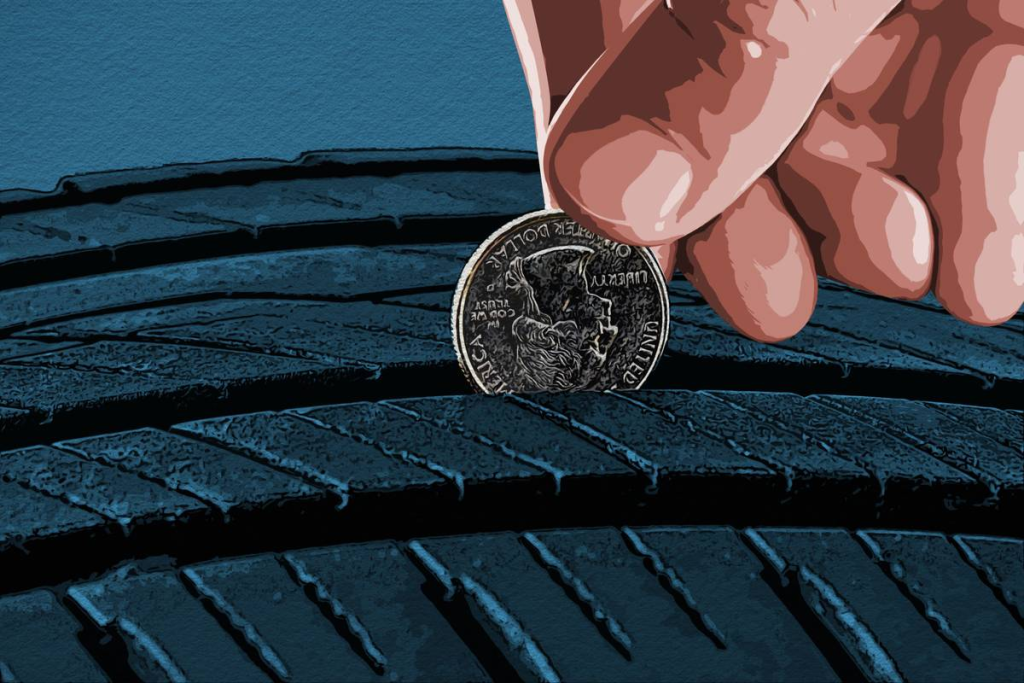
The most accurate way to check tread depth is with a tread depth gauge. A technician can measure all four tires and compare them. You can also use a penny test for a quick visual check.
To perform the penny test, place a penny into the tread groove with Lincoln’s head facing down. If you can see all of Lincoln’s head, the tire tread is at or below roughly 2/32 of an inch, and the tire should be replaced.
Even before reaching 2/32 of an inch, tires may lose performance in rain, snow, or slush. If your tires are getting low, replacing only one may not be the best long-term choice.
Should You Replace Tires in Pairs?
If the other tires are moderately worn, replacing two tires may be the better option. Replacing tires in pairs helps balance traction across the axle and can improve predictable handling.
Consumer Reports advises that if the remaining tires are lightly worn, replacing one tire may be reasonable. If the remaining tires are more worn, replacing a pair may make more sense. You can read more from Consumer Reports on replacing tires in pairs.
If You Replace Two Tires, Where Should They Go?
In many cases, when only two tires are replaced, the newer tires should be installed on the rear axle to help reduce the risk of oversteer and improve stability on wet roads. However, placement can vary depending on the vehicle, tire condition, and manufacturer guidance.
A service technician can help determine the correct placement for your Hyundai based on your tire measurements and drivetrain.
What About All-Wheel Drive Vehicles?
All-wheel-drive vehicles require special attention when replacing tires. Because power can be distributed to all four wheels, tire circumference differences can place extra stress on AWD components if the tread depths are mismatched beyond the manufacturer’s tolerance.
This does not always mean you must replace all four tires every time one tire is damaged. It does mean you should be more careful. Some AWD vehicles may require all four tires to match closely in tread depth. In certain cases, a new tire can be shaved to match the tread depth of the remaining tires, but that option depends on availability and the specific situation.
Consumer Reports explains that AWD vehicles can be sensitive to mismatched tire circumference and recommends checking the owner’s manual for specific replacement guidance. Learn more from Consumer Reports on tire shaving and AWD vehicles.
Why Matching Tire Type Matters
If you replace only one tire, the replacement should match the other tires as closely as possible. Ideally, it should be the same:
- Brand
- Model
- Size
- Load index
- Speed rating
- Tread pattern
- Tire category, such as all-season, winter, or performance
Mixing tire types can affect steering, braking, cornering, traction, and ride comfort. For example, combining one winter tire with three all-season tires is not recommended because each tire type is designed to grip and respond differently.
NHTSA recommends purchasing tires that are the same size as the vehicle’s original tires or another size recommended by the vehicle manufacturer. You can find your correct tire size on the driver-side door placard or in your owner’s manual.
When Replacing Just One Tire May Be Okay
Replacing one tire may be reasonable if:
- The other three tires are nearly new
- The tread depth difference is minimal
- The replacement tire is the same brand, model, size, and rating
- The vehicle manufacturer allows it
- The vehicle is not sensitive to tread depth differences
- A tire professional confirms the setup is safe
This situation commonly happens when a newer tire is damaged by a nail, pothole, sidewall cut, or road debris shortly after the tire set was installed.
When You Should Replace Two or Four Tires
Replacing more than one tire may be the safer and smarter choice when the remaining tires are worn, mismatched, aged, or unevenly worn.
Consider Replacing Two Tires If:
- Two tires on the same axle are worn
- The remaining tires have moderate tread wear
- You want more balanced handling
- Only one axle needs immediate replacement
Consider Replacing All Four Tires If:
- You drive an AWD vehicle and tread depths are too different
- All tires are near the end of their usable tread life
- The tires are old, cracked, or weather-damaged
- The current tires are mismatched
- You are switching tire types, such as moving to winter tires
- You want the most consistent performance and handling
A full set can provide the most balanced traction, braking, ride quality, and handling.
What If You Are Using a Spare Tire?
A spare tire is usually a temporary solution, not a long-term replacement. Many vehicles include compact spare tires designed for limited speed and distance. Even full-size spares can age over time because rubber degrades, even if the tire is rarely used.
NHTSA advises that a full-size spare should not be used as a replacement for worn tires except in emergencies. If you are currently driving on a spare, schedule tire service as soon as possible.
Tire Replacement Service in Topeka, KS
If you need tire replacement in Topeka, McCarthy Hyundai of Topeka can inspect your tires, measure tread depth, check tire condition, and help determine whether one, two, or four tires should be replaced.
Drivers can schedule tire service through the Hyundai service center in Topeka. Before booking, check current Hyundai service and parts specials for available offers.
Need a Vehicle With More Confidence on the Road?
Sometimes tire replacement is all you need. Other times, tire issues are part of a bigger decision about whether your current vehicle still fits your lifestyle. If you are thinking about upgrading, McCarthy Hyundai of Topeka offers several shopping resources.
- Browse new Hyundai vehicles in Topeka
- Explore used cars for sale in Topeka
- Shop certified pre-owned Hyundai vehicles
- Review new Hyundai vehicle specials
- Learn about Hyundai financing options
- Schedule a Hyundai test drive in Topeka
Key Takeaways: Replacing One Tire
- You can replace just one tire in some situations, especially if the other tires are nearly new.
- The replacement tire should match the other tires as closely as possible.
- Tread depth differences can affect handling, braking, traction, and drivetrain systems.
- AWD vehicles may require closer tread depth matching than FWD vehicles.
- If two tires are replaced, the newer tires are often installed on the rear axle for stability.
- A technician can measure tread depth and help determine whether one, two, or four tires should be replaced.
Why Choose McCarthy Hyundai of Topeka?
When you are deciding whether to replace one tire or a full set, it helps to work with a service team that understands Hyundai vehicles and can evaluate your tire condition carefully. McCarthy Hyundai of Topeka provides local tire service support for drivers throughout Topeka and northeast Kansas.
Located at 2920 S Kansas Ave, Topeka, KS 66611, McCarthy Hyundai of Topeka helps drivers with tire inspections, tire replacement guidance, routine maintenance, vehicle service, financing resources, and new, used, and certified pre-owned Hyundai options.
Drivers choose McCarthy Hyundai of Topeka for:
- Hyundai service support in Topeka
- Tire inspections and replacement guidance
- Access to service and parts specials
- Convenient maintenance scheduling
- New, used, and certified pre-owned Hyundai shopping options
- A local dealership team focused on long-term vehicle care
Learn more about McCarthy Hyundai of Topeka, schedule tire service through the service center, or review available service and parts specials.
Conclusion: One Tire Might Be Enough, But It Depends
Replacing just one tire can be the right move if your other tires are still close to new, the replacement tire matches, and your vehicle manufacturer’s guidance allows it. But if the other tires are worn, mismatched, aged, or installed on an AWD vehicle with tight tread-depth tolerances, replacing two or four tires may be safer and better for long-term performance.
The smartest step is to have all four tires inspected and measured. A professional can help you avoid unnecessary replacement while still protecting traction, handling, and drivetrain health.
For tire replacement in Topeka, contact McCarthy Hyundai of Topeka at (785) 267-2800 or schedule service through the McCarthy Hyundai of Topeka service center.
Frequently Asked Questions
Can I replace just one tire on my car?
Yes, you may be able to replace just one tire if the other tires are nearly new, the tread depth difference is minimal, and the replacement tire matches the others in size, brand, model, load rating, and speed rating.
Do I need to replace all four tires on an AWD vehicle?
Sometimes. AWD vehicles can be sensitive to tread depth differences because mismatched tire circumference may stress drivetrain components. Check your owner’s manual and have a technician measure all four tires.
Should I replace tires in pairs?
If the other tires are moderately worn, replacing two tires may provide better balance and handling than replacing only one. A tire professional can help decide based on tread depth and vehicle type.
Where should new tires go if I replace only two?
In many cases, newer tires are installed on the rear axle to help improve wet-road stability. However, placement should be confirmed based on your vehicle, tire condition, and manufacturer guidance.
How do I know if my tire needs to be replaced?
A tire may need replacement if tread is too low, damage is on the sidewall, there are bulges or cracks, the tire was driven while flat, or a puncture cannot be safely repaired.
Where can I get tire replacement in Topeka?
You can schedule tire inspection or replacement through the McCarthy Hyundai of Topeka service center.


